
How to Coordinate a DJ and Photo Booth at an Event
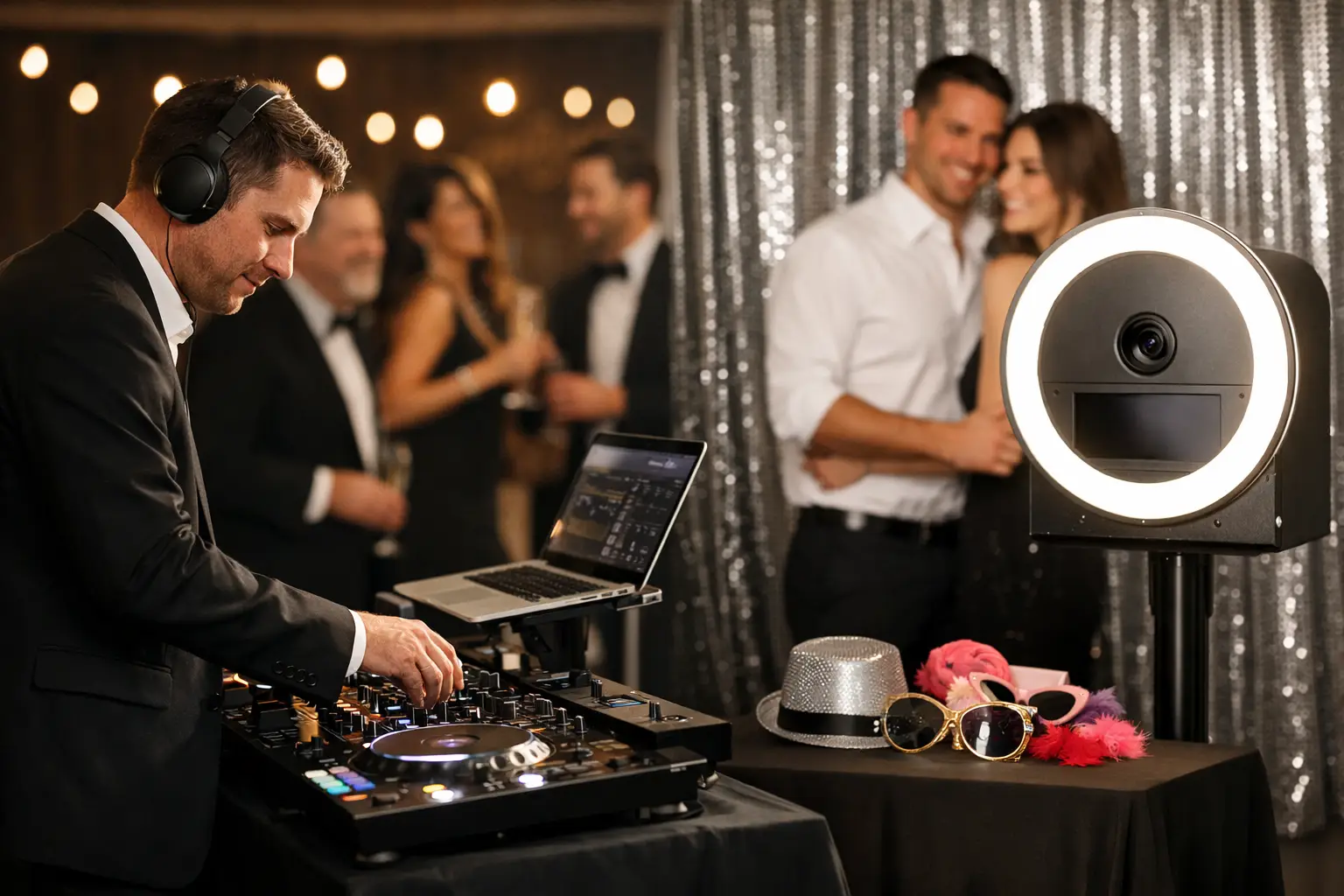
A DJ and photo booth can operate successfully at the same event, but they should not be planned as unrelated services. Music, announcements, booth activity and guest movement all affect the atmosphere in the room.
Good coordination prevents the booth from distracting guests during speeches and keeps its queue away from the dance floor. It also helps both services make better use of quieter and busier parts of the evening.
Share one running order with both services
The DJ and booth supplier should receive the same event timetable. This allows them to plan around the moments that need everyone’s attention.
The running order may include:
- guest arrival;
- food service;
- speeches or presentations;
- awards;
- cake cutting;
- the first dance;
- booth opening and closing times;
- the main dance period; and
- the scheduled finish.
Include contact details for the organiser and venue coordinator. If the schedule changes, both entertainment services should receive the same updated information.
Plan the setup times
The DJ and booth may need access to the room before guests arrive. Ask the venue when suppliers can unload and when the final setup must be complete.
Confirm:
- the unloading location;
- parking arrangements;
- the route to the event room;
- stairs, lifts and narrow entrances;
- which supplier enters first;
- when sound checks are permitted; and
- when packaging and transport equipment must be removed.
If the room is being used for dinner or another activity earlier in the day, the booth may need to be installed during a turnaround. This should be planned with the venue rather than decided on arrival.
Give each service suitable power access
DJ equipment, lighting, booth equipment and printers may require separate power connections. Do not assume that every nearby socket can be used.
The venue should confirm:
- which power points are available;
- whether any circuits are reserved;
- where cables can be routed safely;
- whether extension leads are permitted; and
- whether other suppliers share the same area.
Cables should not cross the dance floor, booth queue or main guest routes unless they can be secured appropriately.
Keep the booth away from DJ speakers
A booth positioned directly beside a speaker can create several problems. Guests may struggle to hear the on-screen instructions, while the booth attendant may find it difficult to communicate with groups.
Strong sound and moving dance-floor lighting can also affect the atmosphere around the photographs.
The booth should remain connected to the party without sitting inside the main sound field. A position near the edge of the evening area often works better than directly beside the DJ.
Protect the dance floor
The booth queue should not form across the dance floor. Guests collecting prints or digital content also need somewhere to stand without restricting dancers.
When planning the layout, allow separate areas for:
- the DJ setup;
- the dance floor;
- the booth and backdrop;
- guests waiting to pose;
- print collection or digital sharing; and
- general circulation.
A floor plan can help both suppliers understand how their equipment affects the room.
Decide when the booth should open
The booth does not always need to begin when the DJ starts playing background music. Opening it at the right point can improve participation.
At a wedding, the booth may open after dinner and speeches, once evening guests have arrived. At a private party, it might begin earlier to give guests an activity while the room settles.
For a corporate event, the booth could operate during arrival drinks, conference breaks or after the formal programme.
Avoid encouraging booth use during:
- important speeches;
- awards;
- formal announcements;
- cake cutting;
- the first dance; or
- a live performance requiring everyone’s attention.
Coordinate the first dance
At weddings, the booth should not compete with the first dance. Guests need a clear signal that the formal moment is about to begin.
A practical sequence may be:
- the booth pauses or stops inviting new groups;
- the DJ announces the first dance;
- guests gather around the dance floor;
- the first dance takes place;
- other guests are invited to join; and
- the booth resumes once the party is underway.
This prevents guests from missing the moment while waiting for photographs or completing a sharing screen.
Use DJ announcements carefully
The DJ can mention the booth at appropriate points during the event. This is useful when it first opens or when there is a quieter period.
Announcements should remain brief. Repeated messages can sound forced and interrupt the music.
A useful announcement might explain:
- where the booth is located;
- when it closes;
- whether prints are available;
- whether a wedding guestbook needs completing; or
- how guests receive digital content.
The DJ and booth attendant should agree on the message before the event.
Use quieter periods intelligently
The dance floor and booth do not need to be equally busy at every moment. In fact, they can support different types of guest participation.
The booth may become busier:
- during arrival drinks;
- between dinner and dancing;
- when guests take a break from the dance floor;
- during changes in music tempo; and
- towards the end of the operating period.
The DJ should not deliberately empty the dance floor to promote the booth. Instead, the services should respond naturally to the event’s rhythm.
Consider mixed-age guest lists
Not every guest will want to dance throughout the evening. A booth provides another social activity for relatives, colleagues and quieter guests.
A traditional photo booth or Magic Mirror may appeal across different age groups because the process is familiar and can provide printed keepsakes.
A 360 booth creates a more energetic video experience and may attract guests who enjoy movement-led content. It needs additional operating space and more active supervision.
Selecting the booth around the audience helps it complement the DJ rather than competing for the same small group of guests.
Coordinate the lighting
DJ lighting can change the appearance of booth photographs if beams or coloured effects reach the posing area.
The two suppliers should check:
- the direction of moving lights;
- whether bright effects point into the booth camera;
- whether haze is being used;
- the position of the backdrop; and
- how the room lighting changes later in the evening.
The booth should use its own controlled lighting where required. The final position can then be tested before guests arrive.
Coordinate sound and booth prompts
Some booths use audio prompts or animations. These may be difficult to hear close to the dance floor.
An attendant can provide instructions directly, but the setup should still be positioned where groups can communicate comfortably.
If the event becomes significantly louder later in the evening, visual instructions and a clear countdown become more important.
Plan the final booth session
Guests should receive a warning before the booth closes. Otherwise, a new queue may form during the final minutes.
The DJ can make one closing announcement, while the booth attendant manages the remaining groups.
Confirm whether:
- the queue closes at the advertised finish time;
- everyone already waiting will be served;
- the printer and sharing station close at the same time;
- the gallery remains available afterwards; and
- the booth can be dismantled while the party continues.
Plan equipment removal
The booth may finish before the DJ. In that case, the removal route should avoid the dance floor and main guest areas.
Some venues do not allow suppliers to move large equipment until guests have left. Others require collection immediately after the booked period.
Agree on the process before the event, especially for a full-size Magic Mirror or 360 platform.
One supplier or separate suppliers?
Both arrangements can work. Using one company for DJ and booth services can simplify communication and scheduling. Separate specialists can also deliver a successful event when the organiser provides a clear running order and room plan.
Whichever option you choose, confirm:
- who is responsible for each service;
- who communicates with the venue;
- how setup times are coordinated;
- how announcements are handled;
- who approves timetable changes; and
- how equipment removal will work.
Questions to ask before booking
Ask the entertainment provider:
- What time will the DJ and booth arrive?
- How much floor space does each setup require?
- Can both services use the available power safely?
- When should the booth open?
- Will the DJ announce the booth?
- How will speeches and the first dance be protected?
- Are booth hosting and digital sharing included?
- When will each service finish?
- How will equipment be removed?
Coordinate the complete guest experience
A DJ and photo booth work well together when each has a clear role. The DJ controls the musical atmosphere and key transitions, while the booth provides another activity and creates guest content.
Gatwick Sound Photo Booth provides hosted booths and professional DJ hire for weddings, parties and corporate events across London, Sussex, Surrey and Kent.
View the available entertainment services or request a custom quote for your event.