11 Best Corporate Event Guest Engagement Ideas
The difference between a forgettable corporate event and one people talk about on Monday morning usually comes down to one thing – whether guests felt involved. The best corporate event guest engagement ideas do more than fill time between speeches or keep a room occupied. They create energy, prompt conversation, and give people a reason to participate rather than just attend.
That matters whether you are planning a client event, awards night, product launch, Christmas party or team celebration. Guests want more than a drinks reception and a playlist. They want moments that feel considered, polished and worth sharing. For brands, that also means opportunities to strengthen recall, encourage interaction and shape how the event is remembered.
What makes guest engagement work at corporate events?
Strong engagement is rarely about adding more activities. It is about choosing the right experiences for the audience, venue and event goal. A leadership conference needs a different rhythm from a festive party. A brand launch may lean into visual content and social sharing, while an internal staff event may work better with informal entertainment that breaks down hierarchy and gets people mixing naturally.
The most effective ideas usually do three jobs at once. They entertain, they create interaction, and they support the wider feel of the event. If an activation looks impressive but causes queues all evening, it can frustrate guests. If it is fun but badly branded, it may not deliver much commercial value. The sweet spot sits somewhere in the middle.
1. Branded photo booth experiences that feel part of the event
A well-styled photo booth remains one of the best corporate event guest engagement ideas because it gives guests an easy way to take part without needing instructions, stage presence or a big time commitment. It suits mixed age groups, works across formal and relaxed formats, and produces content people genuinely keep.
The key is presentation. A corporate booth should not feel like an afterthought in the corner of the room. It should look considered, fit the event styling and offer branded outputs that feel polished rather than forced. Instant prints, digital sharing and bespoke overlays all help, but so does having an on-site host who keeps things moving and encourages participation at the right moments.
This works particularly well for awards evenings, company parties, networking receptions and branded celebrations where guest content has value beyond the event itself.
2. 360 video booths for high-impact social content
If the goal is energy and visibility, 360 video booths are hard to ignore. They create a focal point in the room and invite guests to step into a moment that feels current, social and visually striking. For businesses that want post-event reach, this format can outperform traditional entertainment because guests actively share the finished content.
That said, it depends on the audience. A 360 booth is ideal for launches, end-of-year parties and younger, socially confident crowds. At a more formal conference or drinks-led networking event, it may need careful placement and timing so it adds momentum without competing with the main programme.
When handled well, it becomes more than a novelty. It becomes branded content creation built into the guest experience.
3. A roaming host or interactive MC
Some events fall flat simply because no one is guiding the room. Guests arrive, find their group, and stay there. A strong MC, host or interactive presenter changes that dynamic. They can introduce moments, direct attention, build anticipation and make transitions feel intentional rather than awkward.
This is especially valuable for larger corporate events where guest flow matters. The right host can encourage participation in competitions, lead live polls, draw attention to installations and keep quieter parts of the schedule from losing momentum. It is not about being loud for the sake of it. It is about creating shape and confidence in the room.
4. Music that adapts to the crowd
Music is often treated as background, but it has a direct effect on whether people stay passive or start engaging. A professional DJ who understands corporate audiences can shift the mood across the evening, from arrival drinks to post-dinner dancing, without making the event feel disjointed.
For guest engagement, the advantage is flexibility. Live musicians can create atmosphere beautifully, but a DJ can react faster to the room. If networking is lively, the music can support it. If the room needs a lift after formalities, the set can change pace. When paired with interactive entertainment such as a booth experience, music helps create the kind of event flow that keeps people involved for longer.
5. Live content stations that give guests something to do
Not every guest wants to dance or step in front of a camera straight away. Live content stations offer a softer entry point. That could mean a magic mirror experience, a digital graffiti wall, a message station, or a branded keepsake area where guests contribute something personal.
These ideas work because they create interaction without pressure. They also help during natural lulls, such as the period just after arrival or between dinner and the main entertainment. For corporate planners, they can be useful tools for increasing dwell time in a particular area of the venue or drawing attention to a campaign message.
6. Structured networking with a purpose
Networking only works when people know how to begin. Leaving guests to “mingle” often means colleagues stay with colleagues and new connections never happen. A more structured format gives people permission to engage.
That does not mean turning the event into speed networking unless that suits the brief. It can be as simple as table prompts, hosted introductions, industry-themed conversation starters or a digital activity that pairs guests based on role, interest or objective. For client-facing events, this can add real business value while still feeling relaxed.
The trade-off is tone. If the event is meant to feel celebratory, too much structure can make it feel overly managed. The best approach is light-touch direction that starts conversations but does not dominate the evening.
7. Branded competitions that feel worth entering
Competitions can drive strong engagement, but only when the experience is appealing enough to justify the effort. Guests will not queue to enter something dull. They will take part if the format is quick, the prize is desirable and the activity fits the setting.
Photo and video activations are ideal here because they turn entry into an experience. Guests participate, create content and become part of the event atmosphere at the same time. That is far more effective than a standard business card draw in a bowl. For exhibitors and brand teams, this creates measurable interaction without making the stand feel transactional.
8. Personalisation that makes guests feel noticed
One of the most overlooked engagement tools is personalisation. People respond when an event feels designed for them, not simply staged around them. That could be branded welcome screens, tailored messaging, custom photo templates, team-specific shout-outs or clever touches tied to the company culture.
Personalisation works because it changes the emotional temperature of the room. Guests stop feeling like attendees and start feeling included. In corporate settings, that is especially powerful for internal events where recognition, morale and shared identity matter as much as entertainment.
9. Interactive entertainment that breaks the ice fast
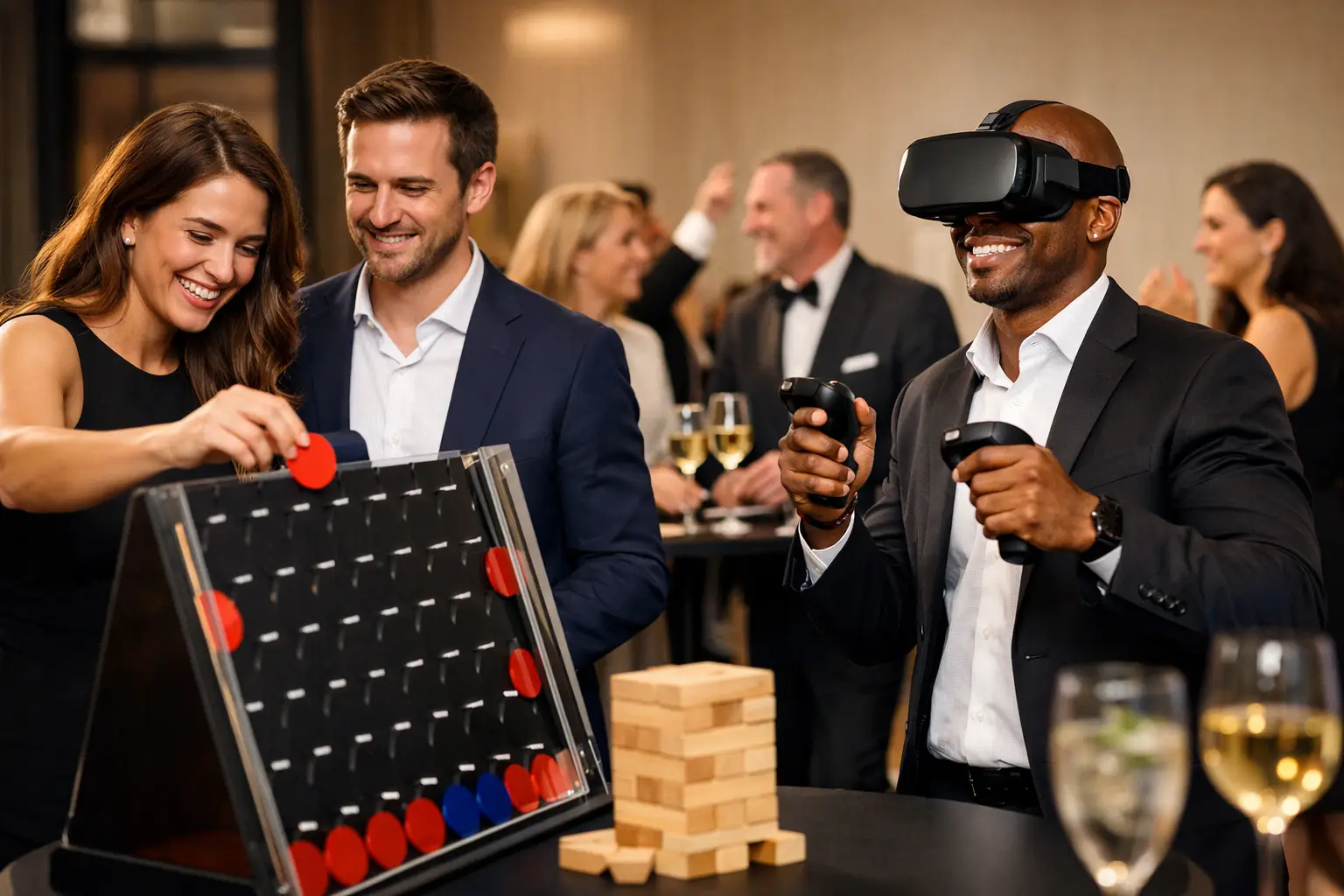
If the guest list includes clients, senior stakeholders and teams who do not know each other well, interactive entertainment can remove that initial stiffness. The right format creates shared laughter and easy conversation, which helps the whole event settle faster.
This could mean a mirror booth host with strong crowd presence, a roaming performer during the drinks reception, or a guided group moment that gets people talking. The format matters less than the outcome. You want something that sparks reaction without hijacking the event.
10. Content-friendly design throughout the room
Engagement does not only happen at one feature point. It can be built into the venue design itself. Statement backdrops, well-lit branded areas, refined booth styling and visually strong installation points all encourage guests to interact and document the night.
This is where many events miss an opportunity. If the room looks good only from the stage, guests have fewer reasons to create content. If several areas are designed with photography and movement in mind, interaction happens more naturally. That benefits both guest enjoyment and post-event visibility.
11. A joined-up entertainment package
Sometimes the smartest engagement idea is not a single feature but a combination that works together. A booth, a DJ and a strong host can create a much better result than any one element on its own. Guests move between moments, the atmosphere builds properly, and the event avoids those flat patches where nothing much is happening.
This joined-up approach is often the best choice for corporate planners who want reliable execution as well as impact. It reduces the risk of separate suppliers pulling in different directions and helps the event feel professionally produced from start to finish.
How to choose the best corporate event guest engagement ideas for your event
Start with the room, not the trend. Ask what your guests are likely to respond to, how formal the event needs to feel, and where the energy dips are likely to happen. A content-led brand launch may benefit from a 360 booth and statement design. A company celebration may get better results from a premium photo booth, DJ and relaxed interactive moments. A networking event may need lighter entertainment and stronger hosting.
It is also worth thinking about practicalities early. Space, power access, queue management and sight lines all affect whether an engagement feature feels polished or disruptive. The most successful corporate events make these details invisible to the guest.
For planners who want a refined, professionally managed experience, that is often where an experienced entertainment supplier proves its value. Gatwick Sound Photo Booth, for example, combines high-spec booth experiences with on-site hosting and DJ options, which makes it easier to create a coherent guest journey rather than a collection of disconnected add-ons.
When people say an event had a great atmosphere, they are usually describing dozens of small moments that were made easy, enjoyable and memorable. That is the real test of guest engagement – not whether you added more, but whether guests genuinely wanted to be part of it.