Best Photo Booth for Mixed-Age Guests
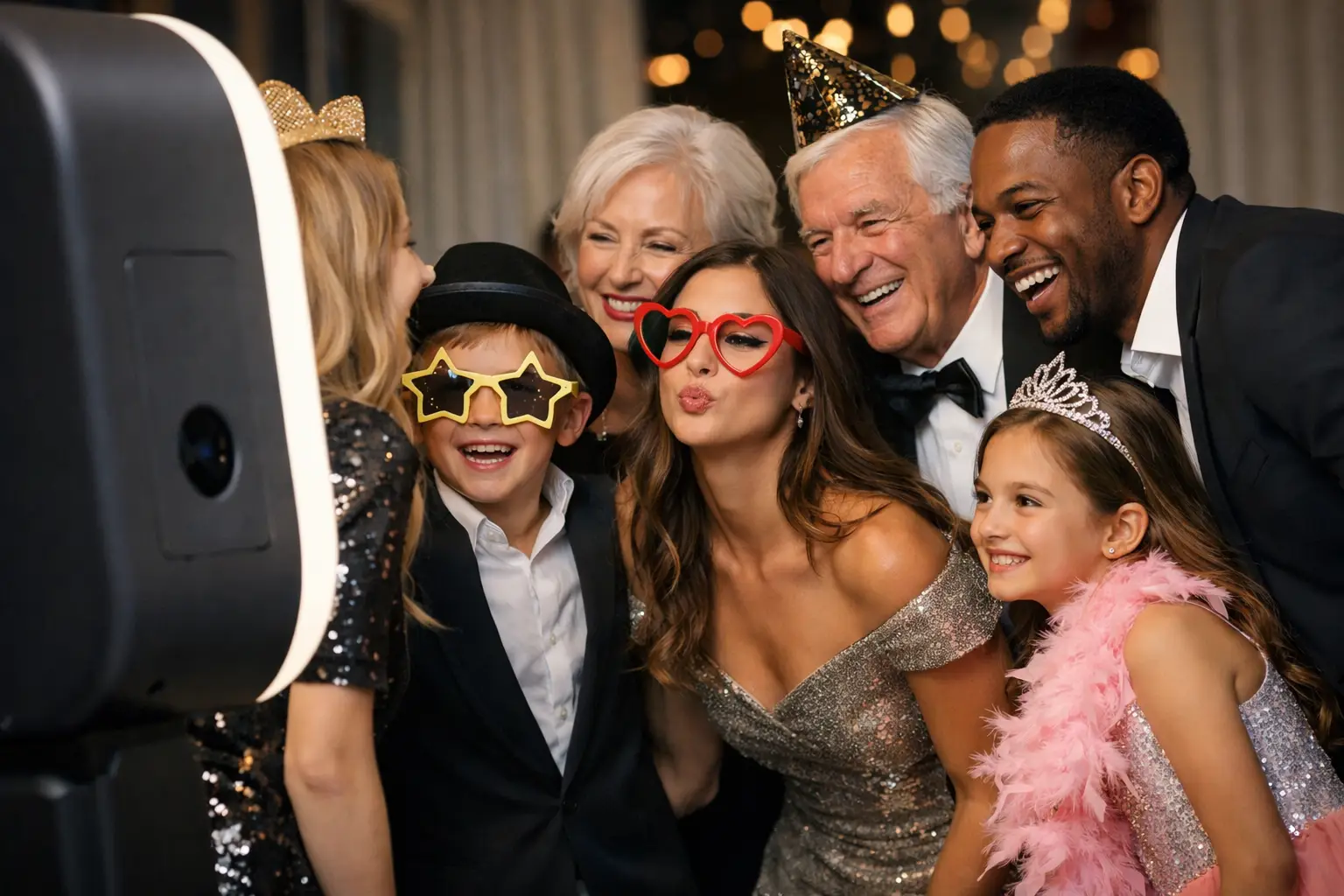
A mixed-age guest list can include children, teenagers, parents, colleagues and older relatives. They may not enjoy the same music or activities, but a well-chosen photo booth can give them something they understand and use together.
The best photo booth for mixed-age guests should be easy to approach, simple to operate and suitable for group photographs. Printed keepsakes, digital sharing and an attentive booth host can help the experience appeal across generations.
Why photo booths work across different age groups
A photo booth does not require every guest to participate at the same time. People can use it when they feel comfortable, return with different groups and choose how formal or playful they want their photographs to be.
This flexibility makes it useful at weddings, family parties and company celebrations. Guests who do not want to dance can still join an activity, while more confident groups can create several different photographs or videos.
A mixed-age booth experience may provide:
- a simple activity that needs little explanation;
- group photographs involving several generations;
- printed keepsakes for guests who prefer physical photographs;
- digital content for guests who want images on their phones;
- an alternative to the dance floor; and
- a natural reason for different groups to interact.
What makes a booth easy to use?
Guests should be able to understand the process within a few seconds. Complicated screens or too many choices can slow the queue and discourage people who are unfamiliar with the technology.
An accessible guest journey normally includes:
- a clear invitation to begin;
- simple posing instructions;
- a visible countdown;
- enough time to change position;
- a clear option for receiving the content; and
- help from an attendant when needed.
The booth host is particularly important at mixed-age events. They can explain the controls, organise groups and help hesitant guests take part without making them feel pressured.
Traditional photo booth
A traditional photo booth is familiar and generally easy to understand. Guests pose, follow the countdown and receive a printed or digital result.
This format can work well for mixed-age weddings and family celebrations because it offers privacy and physical keepsakes. Children, parents and grandparents can all take part without needing to perform in front of the room.
However, the booth entrance and internal space should be checked if accessibility or larger family groups are important. An open-style setup may be more suitable when guests need additional room.
Open-air photo booth
An open-air booth uses a camera facing an open posing area and backdrop. It can accommodate larger groups and allows other guests to see the activity.
This visibility often encourages participation. Family groups can gather together, and guests do not need to enter an enclosed space.
Because the posing area is open, the layout must provide enough room for people to wait without appearing in the next photograph. The backdrop and lighting should also be positioned away from busy walkways.
Magic Mirror
A Magic Mirror can be a strong option for a mixed-age audience. Guests see their full-length reflection before the photograph, making the experience familiar and easy to approach.
The touchscreen can guide users through the sequence, while an attendant remains available to help. Its open format allows relatives and friendship groups to pose together.
The mirror requires sufficient space in front of the screen and suitable venue access. It is a large piece of equipment, so stairs, narrow corridors and small lifts should be discussed before booking.
Selfie Pod
A Selfie Pod has a compact footprint and focuses on digital photographs. It can suit modern venues, receptions and events where guests need a quick activity.
Teenagers and younger adults may be immediately comfortable with the digital interface and sharing options. Older guests can still enjoy the pod, particularly when an attendant is available to explain how images are delivered.
If printed keepsakes are important to part of the audience, confirm whether printing is included or whether the setup is digital only.
360 video booth
A 360 booth creates a short video as a camera moves around guests standing on a platform. It can generate considerable interest at parties, proms and evening receptions.
However, it may not provide the broadest participation across a mixed-age audience. Some guests enjoy performing in front of the camera, while others prefer a familiar still photograph.
A 360 booth is more suitable when:
- the audience enjoys movement-led digital content;
- the venue has enough safe operating space;
- guests are comfortable stepping onto the platform;
- an attendant supervises every recording; and
- video is more important than printed photographs.
At a large event, a 360 booth can operate alongside a traditional booth. For a smaller event, one more accessible format may produce better overall participation.
Prints or digital sharing?
Mixed-age events often benefit from offering both. Printed photographs provide an immediate keepsake, while digital copies allow guests to save or share images on their phones.
Older relatives may prefer a print they can take home. Younger guests may want the digital version straight away. Neither delivery method should be treated as universally better.
Before booking, check:
- whether prints are included;
- how many copies each group receives;
- how digital photographs are delivered;
- whether internet access is required;
- whether an online gallery is provided; and
- how long the gallery remains available.
Consider physical accessibility
Accessibility should be discussed with both the venue and booth supplier. Different booth formats have different entrances, platforms and space requirements.
Ask about:
- step-free access to the booth area;
- the width of entrances and posing spaces;
- whether guests need to stand on a platform;
- space for mobility aids;
- screen and camera height;
- seating options where appropriate; and
- the route from the main event area.
Do not assume that every booth is suitable for every guest. Sharing the expected requirements before booking allows the supplier to recommend an appropriate format.
Use clear screens and instructions
Screen text should be large enough to read and presented against a clear background. Instructions should use short sentences and avoid unnecessary technical language.
A visible countdown helps guests prepare for each photograph. If the booth produces several images in one sequence, allow enough time for groups to change poses.
Sound prompts can also help, although they may be difficult to hear beside a loud dance floor. This is another reason booth placement matters.
Choose props carefully
Props can make the photographs playful, but a large pile of unrelated items may create clutter and slow the queue.
For a mixed-age audience, use a smaller collection of lightweight props that are easy to hold and suitable for the occasion. Guests should also be able to take photographs without props.
At formal weddings or corporate events, a clean backdrop and flattering lighting may appeal more widely than novelty accessories.
Position the booth where guests can find it
A booth hidden in a separate room may be overlooked, especially by guests who are unfamiliar with the venue. It should remain visible from a main circulation area without obstructing doors, catering routes or the dance floor.
Suitable positions may include:
- the edge of the evening reception area;
- a visible space near, but not beside, the dance floor;
- a reception or lounge area used throughout the event; or
- a wide corridor connecting the main event spaces.
Avoid placing it directly beside a loud speaker. Quieter positioning makes instructions easier to follow and can feel more welcoming to guests who prefer to step away from the dance floor.
Open the booth at the right time
At weddings and formal events, the booth is usually most effective after the main meal and speeches. Guests are more relaxed and different parts of the guest list have had time to mix.
Opening it too late may mean older relatives or families with children have already left. Starting at a carefully chosen point can therefore improve participation across the full guest list.
The booth should pause or remain closed during announcements, awards and other moments requiring everyone’s attention.
Why an attendant matters
An attendant helps turn the equipment into a hosted guest experience. They can:
- explain the booth to first-time users;
- help arrange larger groups;
- keep the queue moving;
- assist with prints and digital delivery;
- manage props; and
- encourage participation without applying pressure.
This support can be the difference between a booth used by one confident age group and an experience enjoyed across the event.
Questions to ask before booking
Ask the supplier:
- Which booth is easiest for a mixed-age audience?
- Can it accommodate larger family groups?
- Are prints and digital images included?
- Is an attendant present throughout the hire?
- What accessibility information is available?
- How much floor space is required?
- Can the instructions and screen design be customised?
- How will guests receive their photographs?
Choosing the best booth for mixed-age guests
A traditional or open-air photo booth and a Magic Mirror generally provide the broadest familiarity. A Selfie Pod can work well when space is limited and digital content is the priority. A 360 booth is better suited to guests who enjoy a more active video experience.
The best decision depends on the venue, accessibility requirements and type of content guests are most likely to value.
Gatwick Sound Photo Booth provides hosted photo booths, Magic Mirrors, Selfie Pods and 360 video experiences for weddings, parties and corporate events across London, Sussex, Surrey and Kent.
View the available booth options or request a custom quote for your event and guest list.