
Magic Mirror vs Photo Booth: Which Suits Your Event?
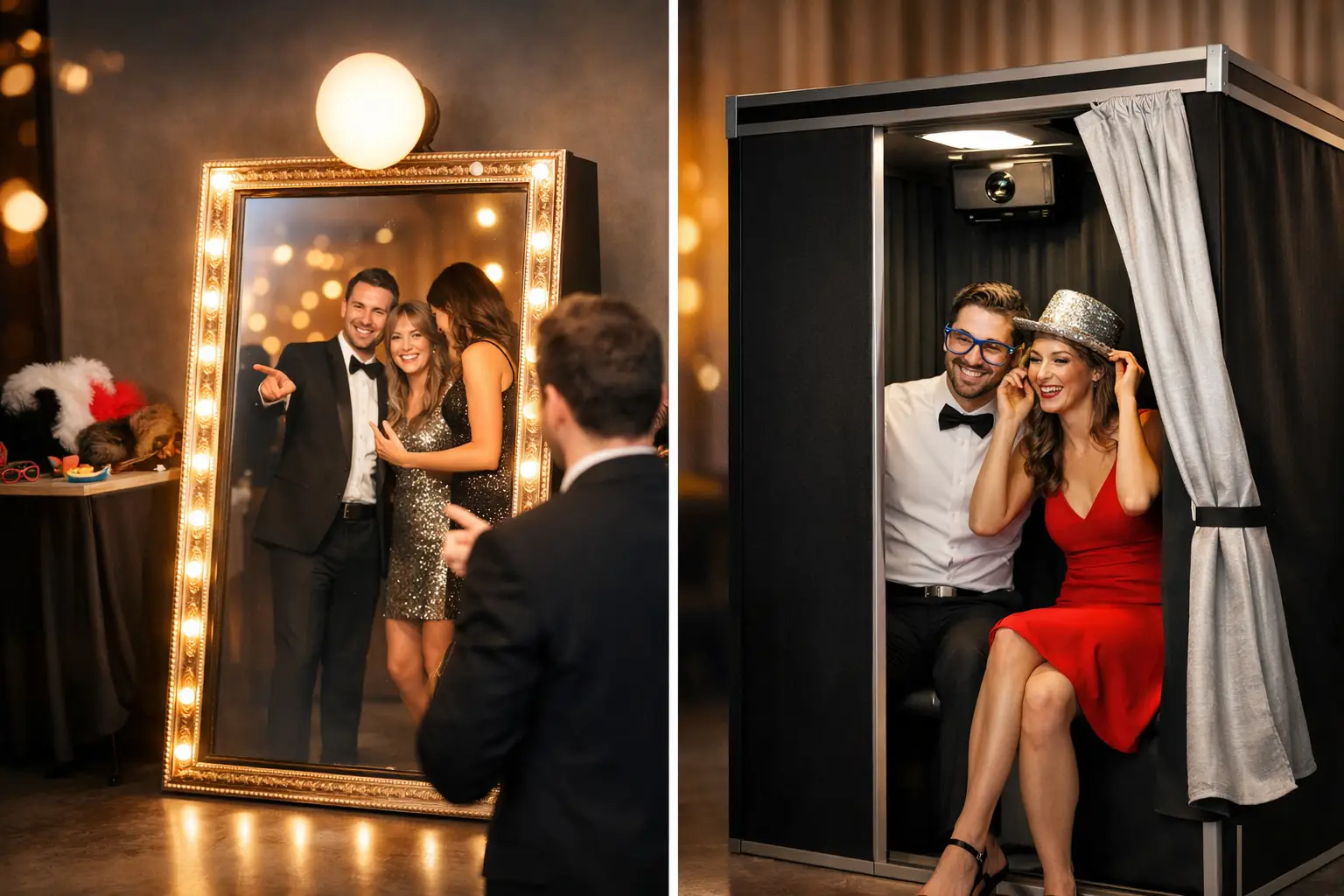
A Magic Mirror and a camera-based photo booth can both provide prints, digital images and a social activity. However, they create different experiences within the room.
The Magic Mirror vs photo booth decision should therefore consider more than appearance. Available space, venue access, guest numbers, photograph style and the event schedule all affect the right choice.
What is the difference between a Magic Mirror and a photo booth?
A Magic Mirror uses a large reflective touchscreen. Guests stand in front of the mirror, follow the on-screen instructions and pose for full-length or group photographs.
A camera-based photo booth uses a separate camera and lighting system. Depending on the design, it may operate with an open backdrop or within a more enclosed structure.
Both formats can include:
- printed photographs;
- personalised print templates;
- digital image delivery;
- props or accessories;
- a booth attendant; and
- a post-event gallery.
The important difference is how the equipment looks, how guests interact with it and how much operating space it requires.
How does the Magic Mirror experience work?
The Magic Mirror is an open experience. Guests can see themselves while preparing for the photograph and interact directly with the screen.
Other guests can also watch the session. This often creates interest around the mirror and encourages more people to participate.
The full-length composition is particularly useful at weddings, proms, awards evenings and formal parties. Guests can show their outfits and pose in larger groups rather than appearing only from the shoulders upwards.
More information about the format is available on our Magic Mirror photo booth page.
How does a camera-based photo booth work?
A camera-based booth photographs guests against a selected background. The camera and lighting position remain fixed, helping create consistent images throughout the event.
Open booth designs allow groups to gather in front of the camera. Other formats may provide a more private environment for guests who prefer not to pose in full view of the room.
The exact footprint, print station and backdrop requirements depend on the booth design. Therefore, organisers should ask for the complete operating dimensions before comparing it with a Magic Mirror.
Which option has greater visual impact?
A Magic Mirror usually creates a noticeable feature because of its size and reflective appearance. It can suit formal venues where the booth will remain visible throughout the evening.
However, the mirror must complement the room. Its position, surrounding equipment and print station should look tidy and intentional.
A well-designed photo booth can also become part of the event styling. A timber or carefully finished booth may suit a barn, country house or design-led celebration better than equipment with a more technical appearance.
The quality of the complete setup matters more than the name of the format. Ask to see recent photographs showing the actual booth, lighting, backdrop and surrounding presentation.
Which produces better photographs?
Neither format automatically produces better images. Lighting, camera settings, background choice and operator experience all affect the final result.
A Magic Mirror is well suited to full-length photographs and wider group poses. Guests can see their position before the image is taken, which may help them feel more confident.
A camera-based booth can produce carefully framed photographs with consistent lighting. It may also offer more flexibility in the choice of background and image composition.
Before booking, review complete event galleries rather than a small collection of selected promotional photographs.
Which is better for group photographs?
A Magic Mirror can work well for groups because guests stand in an open area. However, the available posing distance determines how many people can fit comfortably into the frame.
An open photo booth can also accommodate groups when the backdrop and camera position provide enough width. Meanwhile, a physically enclosed booth may have a stricter capacity.
Ask the supplier how many guests can use the selected setup safely. Large groups should never be forced into a space that affects image quality or guest comfort.
Compare the space requirements
The equipment footprint is only part of the required space. Both formats also need room for guests, the attendant and a possible queue.
A Magic Mirror generally requires:
- space for the mirror and supporting equipment;
- enough distance for full-length photographs;
- a clear posing area;
- access to the print station; and
- space for waiting guests.
A camera-based photo booth may require:
- space for the camera and lighting;
- a suitable backdrop area;
- the correct distance between camera and guests;
- a print or sharing station; and
- a clear entry and exit route.
Do not assume that every photo booth is smaller than a Magic Mirror. An open booth with a wide backdrop may need just as much floor space.
Consider venue access
A large Magic Mirror requires careful transportation. Stairs, narrow corridors, small lifts and restricted loading routes may affect whether it can reach the event room.
Camera-based booths can often be transported in separate sections. However, their backdrop and supporting equipment may still present access challenges.
Provide the supplier with:
- door and lift dimensions;
- details of any stairs or steps;
- the distance from parking to the room;
- loading restrictions;
- setup and removal times; and
- photographs of difficult access points.
This information is especially important for historic venues and upper-floor locations.
Which is easier for guests to use?
Both formats should be straightforward when supported by an attendant. Guests receive instructions, pose and then collect or access their images.
The Magic Mirror provides an interactive touchscreen experience. This can add interest, although the on-screen journey should remain quick enough to prevent long queues.
A photo booth may offer a more direct process. Guests position themselves, follow a countdown and take a short sequence of photographs.
The booth attendant plays an important role in both cases. They help guests understand the process, manage groups and keep participation moving.
Which works better for weddings?
A Magic Mirror can suit weddings where full-length photographs and a strong visual feature are important. It often works well after dinner when guests are ready to relax and participate.
A camera-based booth may suit couples who prefer a particular booth design, backdrop or photographic style. It can also provide a more traditional sequence of booth photographs.
The right choice depends on the venue and the atmosphere of the celebration. Our wedding photo booth hire page provides more information about planning the experience.
Which works better for corporate events?
At corporate events, the decision often depends on branding and guest flow. A Magic Mirror can provide a visible feature for awards evenings and company parties.
A camera-based booth may offer greater flexibility for branded backgrounds, controlled image composition or a compact activation area. However, this depends on the selected setup.
Both options can include company artwork on prints or digital images. Organisers should also consider gallery access, consent and how the content may be used after the event.
Explore our corporate photo booth hire options for business events across London and the South East.
Which option provides better value?
Value should not be judged by the equipment alone. Compare the complete package, including:
- operating time;
- delivery and collection;
- on-site staffing;
- prints and digital delivery;
- personalised design;
- backdrop options;
- gallery access; and
- possible travel or venue charges.
The better-value option is the one that fits the venue and is likely to receive consistent use. A larger feature provides little benefit if its position makes participation difficult.
Magic Mirror vs photo booth checklist
A Magic Mirror may be the stronger choice when:
- you want full-length photographs;
- the booth should create a visible feature;
- guests will enjoy touchscreen interaction;
- the venue has enough posing space; and
- the installation route is suitable.
A camera-based photo booth may be preferable when:
- you want a specific booth or backdrop style;
- consistent photographic framing is important;
- the equipment needs to arrive in separate sections;
- guests may prefer a more traditional experience; or
- the selected setup fits the floor plan more comfortably.
Choose the right booth for your event
The Magic Mirror vs photo booth decision depends on the room, access, guest list and type of photographs you want to create. Neither option is universally better.
Gatwick Sound Photo Booth provides hosted booth experiences across London, Sussex, Surrey and Kent. View our event entertainment services, or Get a Quote to discuss the best format for your venue.