How to Plan a Branded Booth Activation: Brief, Data and ROI
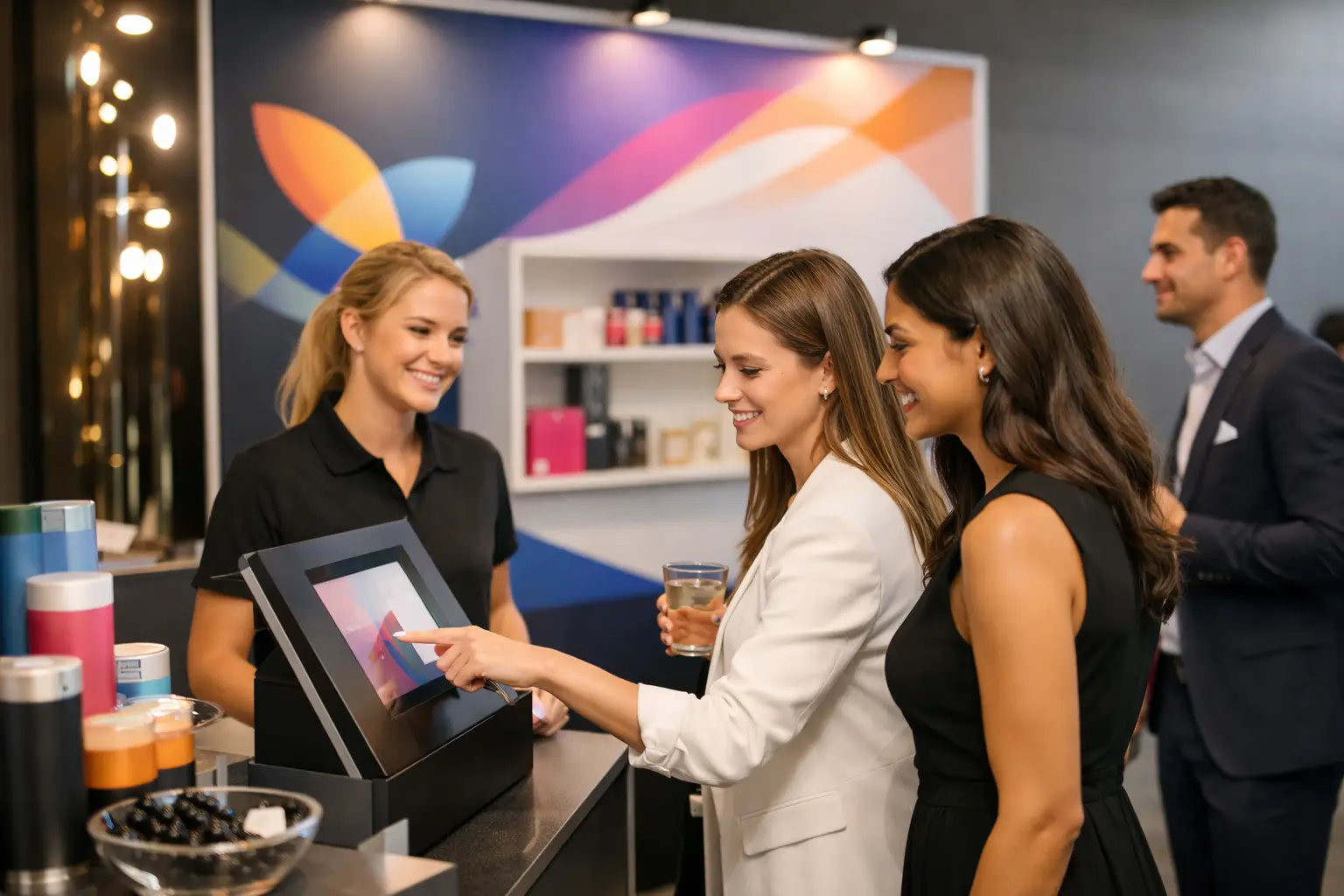
A branded booth activation should do more than add a logo to a photograph. It should support a clear event objective, give guests a simple reason to participate and produce content that remains useful after the event.
The strongest activations begin with a focused brief. Before choosing the booth, backdrop or digital effects, decide what the experience needs to achieve. This makes every later decision easier, from guest flow and branding to data capture and reporting.
Start with one primary objective
A booth activation can support several goals. However, one objective should lead the project.
Common objectives include:
- attracting visitors to an exhibition stand;
- encouraging interaction at a networking event;
- collecting consent-based guest data;
- creating branded photographs or videos;
- supporting a product launch;
- bringing employees together at a company event; or
- giving guests a memorable branded takeaway.
These goals require different experiences. An exhibition stand may need fast participation and high throughput. In contrast, a product launch may place greater value on distinctive content that guests want to share.
A staff celebration may not need lead capture at all. Its success could depend on participation, team interaction and the quality of the guest experience.
Write a useful activation brief
A clear brief helps the supplier understand both the creative idea and the practical requirements. It does not need to be complicated, but it should answer the most important questions.
Include the following information:
- event type and purpose;
- date, venue and operating times;
- expected guest numbers;
- primary audience;
- main campaign objective;
- required branding elements;
- preferred photographs, videos or AI effects;
- printing and digital-sharing requirements;
- data-capture expectations;
- venue access and installation restrictions; and
- how success will be measured.
It also helps to explain the wider event style. A booth designed for a formal awards dinner should feel different from an activation on a busy exhibition floor.
Gatwick Sound Photo Booth plans corporate photo booth experiences around the audience, venue, campaign and required guest journey.
Match the format to the campaign
The activation objective should guide the choice of booth. Do not choose a format only because it is currently popular.
A compact Selfie Pod can support fast participation where floor space is limited. A Magic Mirror can provide printed photographs and a clear focal point at a reception or awards evening. Meanwhile, a 360 video booth can create movement-led content for launches and social events.
AI backgrounds and custom filters offer another option. They can transform a guest photograph into a campaign-specific visual without requiring a large physical backdrop. The approved design can include brand colours, a themed environment or event artwork.
The format must also suit the venue. Consider operating space, ceiling height, power, lighting, background noise and the expected queue. The most elaborate option is not always the most effective one.
Plan the complete branded journey
The guest sees more than the finished photograph. Every part of the interaction can influence how the brand is perceived.
The branded journey may include:
- the booth and surrounding display;
- the welcome or start screen;
- instructions and guest prompts;
- physical or AI-generated backgrounds;
- photograph and video overlays;
- print templates;
- email or sharing screens; and
- the online gallery.
These elements should use consistent colours, fonts and messaging. Nevertheless, the guest should remain the focus of the final image. If the branding overwhelms the photograph, people may be less likely to keep or share it.
Ask the design team to provide approved logos and campaign assets early. Vector files or high-resolution artwork usually produce cleaner results than images copied from a website.
If several stakeholders need to approve the design, nominate one final decision-maker. This reduces conflicting feedback and last-minute changes.
Design the experience around guest flow
A creative concept can still fail if participation feels slow or confusing. The process should be clear from the moment a guest approaches the booth.
At a large conference, the experience may need to handle many people during short breaks. Fewer steps and a separate sharing station can help keep the queue moving. At a smaller client event, there may be more time for personalised interaction.
Placement also affects participation. Position the booth where guests naturally pass, but avoid blocking entrances, bars, catering routes or access points.
An on-site host can welcome guests, explain the experience and keep the area organised. The host also helps maintain a consistent pace during busy periods.
Decide what data is genuinely necessary
Some branded booth activations include guest data capture. This may support image delivery, agreed marketing activity or post-event reporting. However, collecting more information does not automatically create more value.
Begin by deciding what information is actually needed. An email address may be required to deliver a digital photograph. Additional questions should only be included when they have a clear purpose and do not make the experience unnecessarily slow.
The organiser and supplier should agree:
- what information will be collected;
- why it is being collected;
- how guests will be informed;
- what consent is required;
- who can access the information;
- how long it will be retained; and
- how it will be transferred or deleted.
This GDPR-conscious approach protects guests and gives the organiser a clearer process. Consent for image delivery should also be separated from marketing consent where appropriate.
Plan printing, sharing and gallery access
Instant prints provide a physical reminder of the event. Digital delivery, however, allows guests to receive photographs or videos directly on their phones.
The right option depends on the campaign. Printed content can work well at staff events, award ceremonies and client receptions. Digital sharing may be more important for product launches, conferences and social campaigns.
Many events benefit from using both. Guests receive a printed photograph while also having access to a digital version. Our guide to the benefits of instant photo booth prints explains where physical takeaways add value.
An online gallery can provide controlled access to approved event images. Before the event, decide whether the gallery will be public, password-protected or available only to the organiser. The retention period and download permissions should also be agreed.
Set measurable KPIs before the event
Do not wait until the event is over to decide whether the activation worked. Choose suitable key performance indicators while writing the brief.
Possible measurements include:
- number of guest sessions;
- number of photographs or videos created;
- prints produced;
- digital deliveries;
- consent-based data entries;
- gallery visits or downloads;
- average participation time;
- repeat visits; and
- feedback from guests and organisers.
Use measurements that match the objective. If the goal is exhibition engagement, participation and qualified conversations may matter more than public social posts. For a staff event, guest feedback and interaction between teams may be more useful.
Not every guest will share content publicly. A photograph can still deliver value when it is saved, printed or shared privately.
Prepare content for use after the event
The activation can continue to support the campaign after the venue has closed. Photographs and videos may be suitable for internal communications, event summaries, social posts or future promotional material.
However, post-event use should be planned in advance. Confirm which images the organiser can access and whether additional consent is needed for promotional use.
It is also worth agreeing the delivery format. Organised folders, consistent file names and a clear gallery structure make the content easier to review and reuse.
Use real event experience to improve the plan
Large corporate events often involve short participation windows and high guest numbers. At the World Finance Forum in London, Gatwick Sound Photo Booth used live AI background replacement to create branded guest photographs during the event.
A separate digital sharing station helped guests receive their images without delaying the main booth. This supported guest flow while keeping the branded experience easy to use.
Details such as these should form part of the activation plan. Technology, branding, hosting and venue logistics need to work as one system.
Build an activation with a clear purpose
A successful branded booth activation starts with the campaign goal and works backwards. The booth format, visual design, guest journey and reporting should all support that objective.
Gatwick Sound Photo Booth provides hosted branded experiences for conferences, exhibitions, launches, awards evenings and company celebrations across London, Sussex, Surrey and Kent.
To discuss your event brief, branding, AI backgrounds, filters, data options and reporting requirements, Get a Quote.