Photo Booth Prints vs Digital Sharing: Which Is Better?
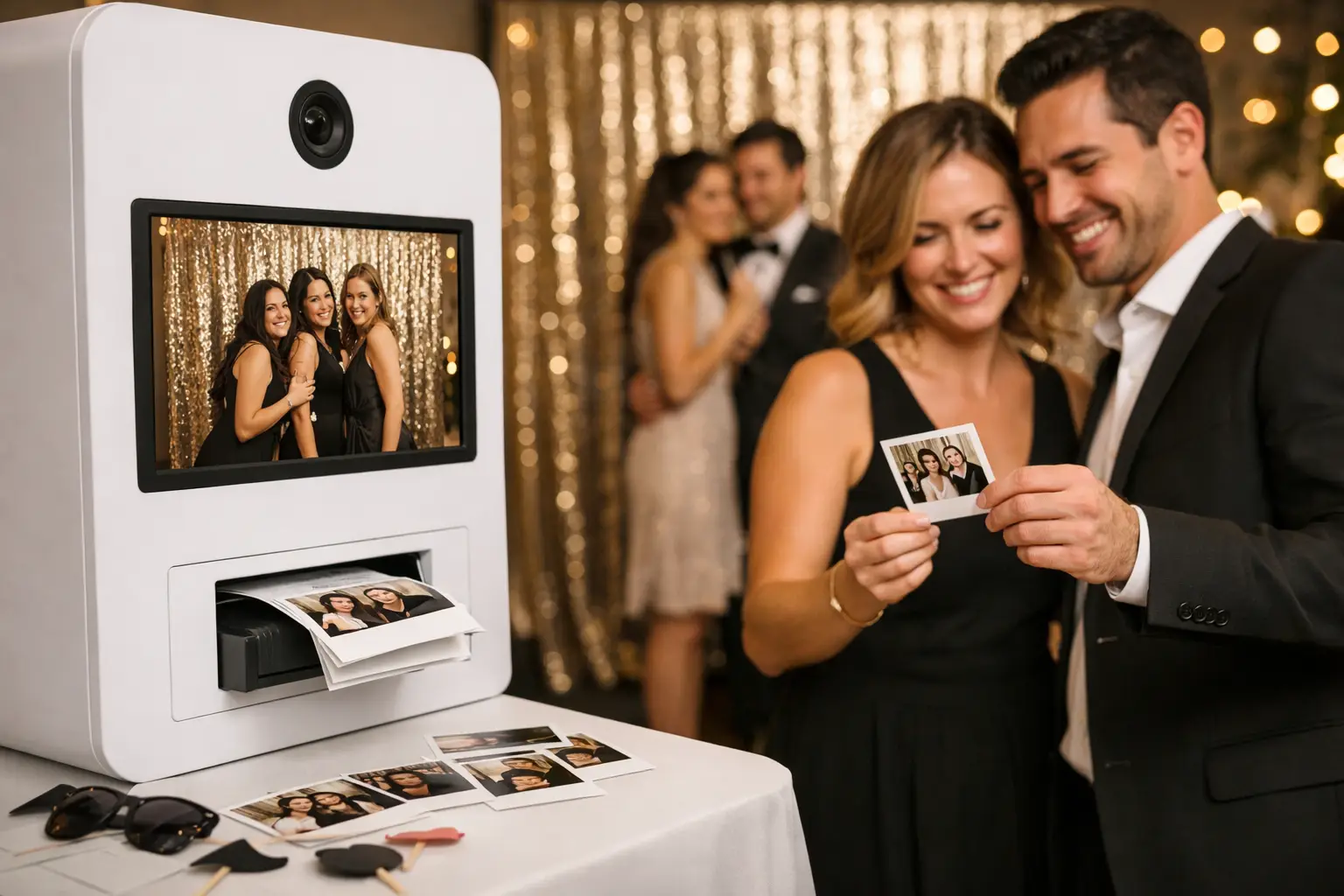
Instant prints and digital sharing provide two different ways for guests to receive their photo booth images. One creates a physical keepsake, while the other places the photograph directly onto a mobile phone.
Neither option is right for every event. The best choice depends on the audience, venue, event purpose and what guests are likely to do with their photographs afterwards.
Many weddings, parties and corporate events benefit from combining both. However, understanding the differences can help you select the right package and guest journey.
What do instant photo booth prints provide?
Instant prints give guests a physical photograph before they leave the event. Depending on the booth and package, this may be a traditional photo strip or a larger print.
The design can include:
- names and an event date;
- wedding colours;
- a company logo;
- campaign artwork;
- an event title; or
- a short personalised message.
Guests can take the print home, add it to a guestbook or display it later. The photograph becomes a physical reminder rather than another file stored on a phone.
Our guide to booking a photo booth with instant prints explains how the printing experience works.
What does digital photo booth sharing provide?
Digital sharing allows guests to receive their photographs, GIFs or videos electronically. Available delivery methods depend on the booth, software and venue connection.
Digital content is useful when guests want to:
- save the image to their phone;
- share it privately with friends;
- send it to a group chat;
- post it on social media; or
- access an online gallery after the event.
This method is particularly important for 360 videos, animated GIFs and AI-transformed photographs that cannot be reproduced fully as a static print.
Prints create a physical event memory
A printed photograph has a different emotional value from a digital file. Guests can hold it immediately and take it home at the end of the event.
At a wedding, the print may be kept with cards, invitations and other memories from the day. At a birthday, it becomes a personal reminder of the celebration. After a company event, a group photograph may remain on a desk or noticeboard.
This longer physical life is one of the main benefits of instant printing. Guests do not need to remember to download the image later.
Digital delivery makes sharing easier
Digital images can travel beyond the venue within minutes. This can extend the experience while the event is still happening.
However, public posting should not be treated as the only measure of success. Guests may save photographs, send them privately or share them through closed groups.
The finished image still needs to look good. Clear lighting, flattering framing and a restrained design will make people more likely to keep it.
Which option is better for weddings?
Weddings often benefit from providing both prints and digital photographs.
Prints give guests a keepsake connected to the couple and the venue. They can also support a photo guestbook when one copy is given to the guest and another is added to the book.
Digital delivery allows guests to save and share their images during or after the reception. It also provides a convenient alternative if a print is lost or damaged.
The best balance depends on the couple’s priorities:
- choose prints when physical keepsakes are important;
- choose digital delivery when quick sharing is the main priority;
- combine both when guests should receive each format.
Couples can view our wedding photo booth experiences when comparing the available options.
Which option is better for corporate events?
Corporate events often use photographs for both guest engagement and event branding.
A printed photograph can carry a company logo, campaign design or event title. It gives the guest a branded takeaway without requiring them to post publicly.
Digital content can support faster delivery and wider use. It may be appropriate for conferences, launches, exhibitions and company celebrations where guests want immediate access to their images.
If information is collected for digital delivery, the organiser and supplier should agree:
- what information is required;
- why it is collected;
- how guests will be informed;
- who can access the data;
- how long it will be retained; and
- whether separate marketing consent is needed.
A GDPR-conscious process makes the guest journey clearer and protects both the organiser and attendees.
Businesses can explore our corporate photo booth experiences for information about branding, prints and digital options.
Which option is better for parties and proms?
Birthday parties and proms often include guests who value both immediate sharing and a physical reminder.
Digital delivery provides quick access to photographs, GIFs and videos. Meanwhile, prints give friends something they can take home or exchange during the event.
The booth format also affects the decision. A 360 video booth is primarily designed around digital content. A Magic Mirror or traditional photo booth can place greater emphasis on printed photographs.
A Selfie Pod may support digital interaction in a smaller space, with available print options depending on the chosen package.
Party hosts can compare formats on our party photo booth hire page.
How prints affect the booth area
Printing requires a clear collection point. Guests need somewhere to wait briefly and receive their photographs without blocking the next group.
At a busy event, the host can manage this process and keep the photography area organised.
The booth position should allow guests to:
- approach the booth easily;
- pose without blocking a walkway;
- collect prints comfortably; and
- move away before the next group begins.
A guestbook station may require additional space. Place it close enough to the booth to be convenient, but far enough away to prevent congestion.
How digital sharing affects guest flow
Digital delivery can also create delays when several guests remain beside the booth while entering details or waiting for content.
A separate sharing station may help at high-volume events. Guests can leave the main photography area and collect their images without delaying the next session.
This approach can be particularly useful during conference breaks, exhibitions and large company celebrations.
Venue connectivity should be checked before the event. Some sharing features may depend on a suitable internet connection or an agreed alternative delivery process.
What about an online gallery?
An online gallery provides another way for guests or organisers to access photographs after the event.
Before the booking, confirm:
- who will be able to access the gallery;
- whether it will be password-protected;
- how long it will remain available;
- whether guests can download images; and
- who is responsible for sharing the access details.
A gallery does not replace instant delivery for every event. Instead, it provides an organised collection that can be accessed later.
How should the print and digital designs match?
When both formats are provided, the visual design should remain consistent. The print template and digital overlay can use the same colours, logos and event identity.
However, they may need different layouts. A print and a mobile image do not always use the same dimensions.
Important text should remain readable, while logos should not cover faces or clothing. Testing each version before the event prevents unexpected cropping and poor placement.
Do digital photographs replace prints?
Digital sharing has not removed the value of printed photographs. The two formats serve different purposes.
A digital image provides speed and convenience. A print offers a tangible reminder that guests can keep without opening a gallery or searching through their phone.
For many events, the strongest experience uses both. Guests receive the immediate satisfaction of a print and the flexibility of a digital copy.
Questions to ask before choosing
Before confirming the output options, ask:
- Which booth formats provide prints?
- What size and layout will the prints use?
- Can the design be personalised?
- Which digital delivery methods are available?
- Is an online gallery included?
- Will guest information be collected?
- How will consent and retention be managed?
- Does the venue have suitable connectivity?
- Is enough space available for print collection?
Clear answers will help you plan a smoother guest experience.
Prints, digital sharing or both?
Choose instant prints when you want guests to leave with a physical keepsake. Choose digital sharing when fast access to photographs, GIFs or videos is the priority.
Combine both when you want to provide an immediate printed memory and a convenient digital version.
Gatwick Sound Photo Booth provides hosted photo experiences for weddings, parties and corporate events across London, Sussex, Surrey and Kent. Available print and sharing features depend on the selected booth and package.
To discuss the right delivery options for your event, Get a Quote.