
Wedding Photo Booth and DJ Timeline: How to Plan the Evening
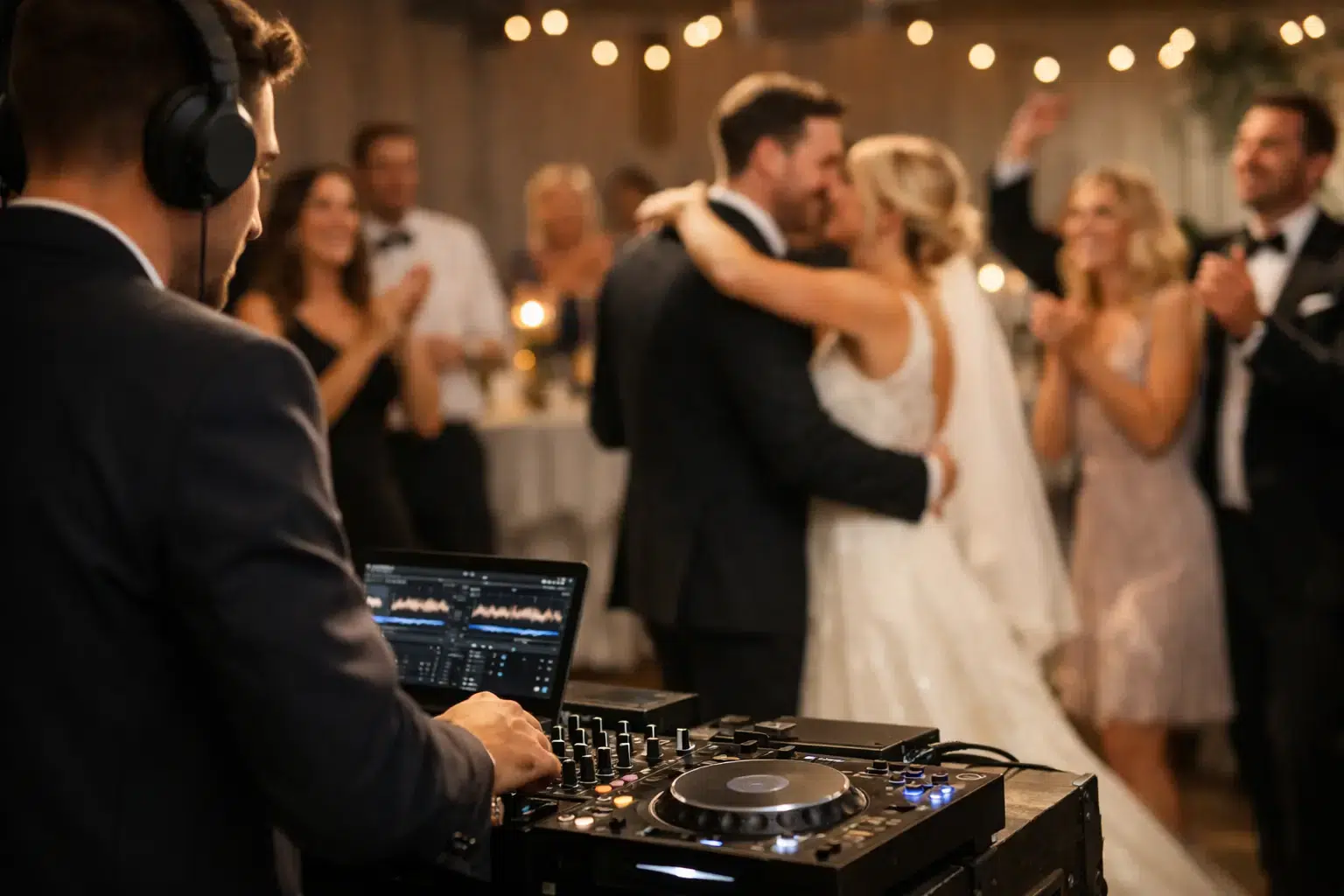
A wedding timeline should give each part of the celebration enough space without making the day feel rigid. The photo booth, music, speeches, first dance and evening food all need to work around the venue schedule and the way guests naturally move through the event.
Planning the DJ and photo booth together can help the evening flow more smoothly. The booth provides an activity during social periods, while the DJ supports the transition from dinner and conversation into the evening celebration.
There is no universal timetable that suits every wedding. Instead of copying fixed times, build the plan around the stages of your own reception.
Begin with the venue schedule
Before deciding when the booth should open or when the first dance should happen, confirm the venue’s practical timings. Ask when suppliers can access the room, when dinner is expected to finish, whether tables need to be moved and what time music must end.
It is also important to know whether the wedding breakfast and evening reception take place in the same room. If the venue needs to reset the space after dinner, guests may temporarily move to a bar, lounge or outdoor area.
This transition can influence when the DJ completes the sound check and when the photo booth becomes available. Share the complete venue schedule with your entertainment provider rather than planning each element separately.
For more practical considerations, our guide to planning DJ and photo booth setup for an event venue covers access, power, positioning and guest flow.
Before guests enter the reception
The DJ and booth should be fully set up before their agreed opening times. The provider may need access for unloading, assembly and equipment checks while the venue is still preparing the room.
Confirm where the booth will stand and how much surrounding space guests will have. A traditional photo booth, Selfie Pod and Magic Mirror create different layouts, so the final position should be based on the selected format.
The booth should be easy to notice without blocking an entrance, access to the bar or a route used by venue staff. The DJ position should feel connected to the dance floor while remaining clear of dining tables and quieter seating areas.
Should the photo booth open during the drinks reception?
Opening the booth during the drinks reception can give guests an activity while the couple is occupied with photographs or while people are waiting to enter the wedding breakfast. It can also encourage different groups to interact early in the day.
However, an early opening is not automatically the best choice. If guests are moving between several spaces, the booth may receive less attention. Opening it earlier also uses part of the booked operating period before evening guests arrive.
Consider the following questions:
- Will most guests remain close to the booth?
- Is there enough time for setup before the drinks reception?
- Do you want evening guests to have access to the full experience?
- Will the booth remain in the same position throughout the event?
- Does the selected package cover the required operating period?
If the drinks reception already includes photographs, greetings and other activities, it may be better to save the booth for later.
During the wedding breakfast and speeches
The wedding breakfast is usually centred on food, conversation and speeches. A booth operating in the same room could distract guests or create unnecessary movement while venue staff are serving.
If the booth is positioned in a separate reception area, it may be possible to keep it available. This should be agreed with the venue and provider, particularly if an on-site host is included.
Do not rely on an exact predicted finishing time for speeches. They can run shorter or longer than expected, so leave some flexibility before the next major part of the evening begins.
Use the room turnaround effectively
When the venue needs to move tables or prepare the dance floor, guests may be asked to leave the main room temporarily. This period does not have to feel like an interruption.
The photo booth can provide a useful activity if it is already set up in an accessible adjoining space. Guests can create photographs, collect prints where included and socialise while the venue prepares the room.
If the booth is located inside the room being rearranged, it may need to remain closed until the venue has finished. Confirm this before the wedding so that setup and opening times are realistic.
Welcome evening guests without rushing the party
Evening guests usually need time to arrive, greet the couple, find the bar and settle into the venue. The music can create a welcoming atmosphere without immediately demanding a full dance floor.
This can be an effective time to open the photo booth. It gives newly arrived guests something to discover and allows day guests to begin using it before the main dancing starts.
Make the booth visible and let guests know it is available. Where on-site hosting is included, the host can explain the process and encourage participation without interrupting conversations.
Coordinate the cake cutting and first dance
The cake cutting and first dance often bring guests together around the same part of the room. Their exact order depends on the couple and venue, but they should be planned with guest movement in mind.
If the booth is close to the dance floor, consider temporarily pausing activity or allowing the host to direct attention towards the couple. This prevents an important moment from competing with another attraction.
Once the first dance is complete, the DJ can invite guests to join the couple. The booth can then reopen or continue operating as an alternative activity for guests who are not ready to dance.
Keep the booth available during the evening celebration
The busiest part of the dance floor does not have to be the only focus of the evening. Some guests will dance regularly, while others will move between the bar, seating areas and photo booth.
A well-positioned booth gives mixed-age groups another way to join the celebration. Depending on the chosen format and package, the experience may include instant prints, digital sharing and customised print designs.
Think about how queues will form. Guests waiting for the booth should not block access to the dance floor, bar or venue exits. Enough surrounding space allows groups to gather without interrupting the rest of the reception.
Our wedding photo booth options can help you compare formats and decide which type of experience suits your venue.
Plan evening food around guest movement
When evening food is served, guests will naturally move away from both the dance floor and booth. This is expected and does not mean the entertainment has lost momentum.
If possible, avoid placing the food queue directly across the booth area. The venue should also have a clear route for staff to replenish or remove food without passing through equipment or guest queues.
The DJ can adjust the music while guests eat and build the atmosphere again afterwards. The booth can remain available, provided the layout allows guests to use it comfortably.
Choose the booth closing time carefully
The photo booth does not always need to operate until the final song. Its closing time should reflect the selected package, venue access and the amount of time required for collection or removal.
Give guests some notice before the booth closes. Where a host is included, they can let people know when the final sessions are approaching. This helps avoid disappointment and allows the provider to finish in an orderly way.
If the booth needs to be removed while the DJ continues, confirm that equipment can leave without crossing a busy dance floor. In some venues, collection after the guests have departed may be more practical.
Coordinate the people involved
The couple should not have to manage every timing decision during the reception. Agree in advance who can confirm changes with the DJ, booth host and venue team.
This person might be a wedding coordinator, venue manager or trusted member of the wedding party. They should know the important points in the schedule and be able to respond if dinner, speeches or photographs take longer than planned.
The photographer should also know when the booth opens and when the first dance is expected. This helps avoid conflicting activities and ensures the main wedding moments remain clear.
Allow flexibility in the timeline
A useful wedding timeline provides structure without depending on every activity beginning at an exact minute. Protect the timings that cannot move, such as venue access and the music curfew, while allowing social parts of the evening to develop naturally.
The DJ and booth provider should receive the latest schedule before the wedding. Let them know about any room changes, planned announcements, first-dance arrangements and restrictions imposed by the venue.
A combined DJ and photo booth package allows both parts of the entertainment to be planned around the same guest journey. The exact inclusions and operating periods will depend on the selected package.
Wedding entertainment timeline checklist
Before confirming the final schedule, check that you know:
- when the entertainment provider can access the venue;
- where the DJ and booth will be positioned;
- whether the wedding breakfast and evening reception share the same room;
- when the venue will prepare the dance floor;
- when evening guests are expected to arrive;
- when the booth should open and close;
- when the cake cutting and first dance are planned;
- when evening food will be served;
- who can approve timing changes during the reception;
- what time the music must finish;
- how and when equipment can be collected.
Create a timeline that supports the celebration
The best wedding timeline is not the one with the most detail. It is the one that helps the venue and suppliers work together while giving guests enough time to enjoy each part of the reception.
Use the photo booth during periods when guests are ready to socialise, keep it accessible during the evening and avoid making it compete with important wedding moments. Let the DJ support the changes in atmosphere as the celebration moves from arrivals and conversation into dancing.
Planning a wedding across Sussex, Surrey, Kent or the Crawley and Gatwick area? Explore our DJ and photo booth packages, or tell us about your venue, schedule and preferred booth format to Get a Quote.