Can You Hire a Photo Booth and 360 Booth Together?
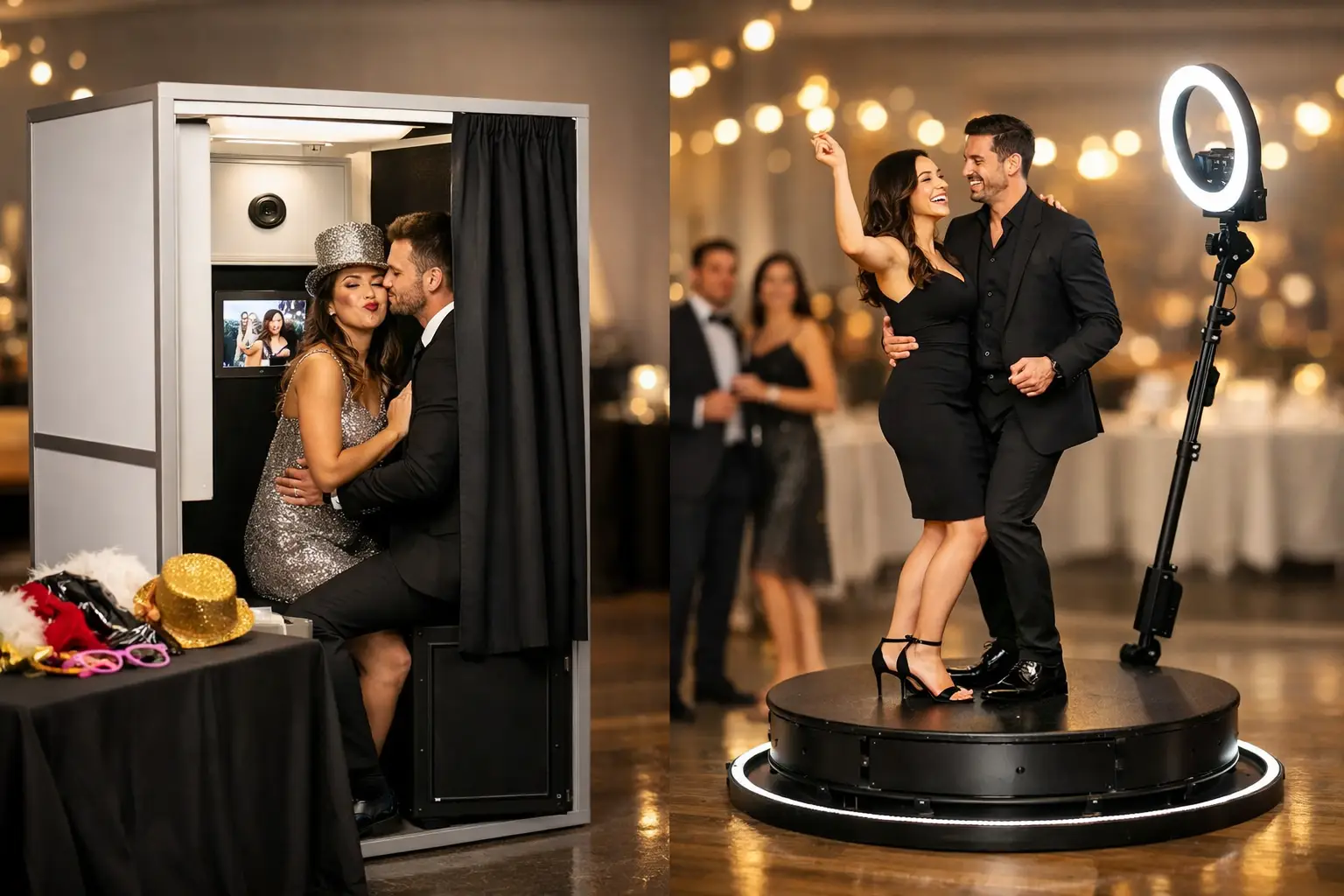
A traditional photo booth and a 360 booth create very different experiences. One produces printed and digital photographs, while the other records short videos built around movement. At a large wedding, company celebration or launch event, the two formats can work together.
However, booking both is not automatically the right decision. The venue needs enough space, the schedule must give guests time to use them and each booth should have a clear purpose.
Before adding two attractions to the event, consider whether they will complement each other or simply compete for attention.
Can you hire a photo booth and 360 booth together?
Yes, a photo booth and 360 booth can operate at the same event. They serve different types of guests and create different content.
A traditional photo booth offers a familiar experience. Guests pose in couples or groups and can receive printed photographs as well as digital copies. It is generally easy to use and appeals to a broad age range.
A 360 booth is more performance-led. Guests stand on a platform while a camera moves around them. Music, slow motion and visual effects are then used to create a short digital video.
Providing both options gives guests a choice. Some may want a printed photograph for a guestbook or their home. Others may prefer a video they can share from their phone.
When does hiring both make sense?
Two booths are most useful when the event is large enough to support them. They can also help when the audience includes different age groups or the organiser needs more than one type of content.
Large weddings
A photo booth can provide prints throughout the reception, while a 360 booth creates a livelier feature during the evening party. This gives relatives and reserved guests a familiar option without removing the high-energy experience for those who want it.
The two formats may also support different parts of the wedding. The photo booth could open after the wedding breakfast, while the 360 booth begins once the music and dancing are underway.
Company celebrations and Christmas parties
Large company parties often include guests from different departments, age groups and levels of seniority. Not everyone will want to participate in the same activity.
A hosted photo booth offers a simple way for colleagues to take photographs together. Meanwhile, the 360 booth can become a more visible feature near the evening entertainment.
Using both formats can also reduce pressure on one queue. Guests can choose the activity they prefer instead of waiting for a single booth.
Product launches and brand events
At a product launch, the photo booth and 360 booth can be given separate content roles. The traditional booth may produce branded still images or prints. The 360 setup can create short campaign videos designed for digital sharing.
Both experiences should use the same approved colours, logos and campaign message. This keeps the content consistent even though the formats are different.
Awards dinners and gala events
At a formal event, a traditional booth or Magic Mirror can provide flattering photographs earlier in the evening. A 360 booth can then add more movement once the awards and speeches have finished.
This staggered approach prevents the entertainment from distracting guests during the formal programme.
When is one booth enough?
Many events only need one booth. Hiring two simply to create a larger entertainment list may add expense and use valuable floor space without improving the guest experience.
One format is usually sufficient when:
- the venue has limited space;
- the guest list is relatively small;
- the hire period is short;
- the event has several other attractions;
- most guests want the same type of content; or
- the organiser has one clear campaign objective.
For example, a compact networking reception may be better suited to a Selfie Pod. Adding a 360 platform could create unnecessary congestion.
Similarly, a wedding focused on prints and a guestbook may gain little from a second video setup. In that situation, investing in longer booth operating time may provide more value.
Check whether the venue can support both
The equipment footprint is only part of the space requirement. Each booth also needs room for guests, an attendant and a queue.
A 360 booth requires a clear safety area around the platform and rotating camera arm. Spectators often gather nearby, so additional circulation space is important.
A traditional booth may have a smaller working area, but guests still need somewhere to wait and collect prints. If a backdrop is included, the full depth of the setup must also be considered.
Before confirming both formats, check:
- the floor space available for each booth;
- the distance between the two setups;
- power supply locations;
- door, stair and lift access;
- fire exits and catering routes;
- the position of the bar and dance floor;
- venue Wi-Fi or mobile signal; and
- setup and collection times.
The two booths should not be placed directly beside one another. Separating them helps distribute guests around the venue and gives each experience its own identity.
Give each booth a different purpose
If both booths produce almost identical content, one may be overlooked. A clearer plan gives guests a reason to try each format.
The photo booth could focus on:
- printed photographs;
- family and group pictures;
- a wedding guestbook;
- formal event portraits; or
- branded keepsakes.
The 360 booth could focus on:
- short social videos;
- movement and group performances;
- campaign content;
- slow-motion effects; or
- high-energy evening entertainment.
At a corporate event, the formats can use related branding without looking identical. The print design might feature a restrained company logo, while the video overlay can use more visible campaign graphics and animation.
Coordinate the operating times
The booths do not always need to open at the same time. Staggered operating periods can make better use of the programme.
At a wedding, the traditional booth could begin during the room turnaround or drinks period. The 360 booth might open after the first dance, when guests are ready for a more energetic experience.
At a corporate event, still photographs may suit the arrival reception. Video content can follow after presentations, awards or dinner.
This approach gives each booth a stronger moment. It can also reduce queues and prevent both attendants from trying to attract the same guests.
Plan the guest flow
Two booths can help manage a large audience, but only if the layout has been planned carefully. Guests should be able to identify each experience and understand where to wait.
A trained attendant at each booth can explain the process and keep participation moving. This is particularly important for the 360 platform, where guests need safety instructions before filming begins.
Signs can also help. They should explain what each booth produces and whether guests will receive a print, digital image or video.
Keep the branding consistent
When two booth formats are used at the same event, their visual identity should feel connected. The booth screens, overlays, print templates and gallery can use the same event colours and design elements.
However, consistency does not mean placing an oversized logo across every image. Guests are more likely to keep and share content that looks attractive.
Ask to approve the print and video designs before the event. Check spelling, image placement, logo proportions and the way the design appears on a mobile screen.
Consider how the content will be delivered
A traditional booth may provide physical prints, digital copies and an online gallery. A 360 booth normally delivers videos digitally.
Guests should receive simple instructions for accessing their content. If the venue has weak internet access, videos may need to be processed and delivered once a reliable connection is available.
For corporate events, gallery access and consent should be agreed in advance. Receiving a photograph or video does not automatically mean that a guest has agreed to future marketing communication.
Photo booth and 360 booth packages
Using one experienced supplier for both formats can make setup and communication easier. The supplier can review the venue layout, coordinate operating times and prepare consistent designs.
Nevertheless, the final decision should be based on the event rather than the size of the package. In some venues, one well-positioned booth will perform better than two competing setups.
Gatwick Sound Photo Booth provides traditional booths, Magic Mirrors, Selfie Pods and 360 video experiences for weddings, parties and corporate events across London, Sussex, Surrey and Kent.
You can also view the available event entertainment services before deciding which combination suits your venue and audience.
Choose according to the event
Hiring a photo booth and 360 booth together can work well for a large event with enough space and a varied guest list. The photo booth provides accessible photographs and physical keepsakes. The 360 booth adds movement and shareable video.
For smaller occasions, one carefully selected format is usually enough. Consider the venue, schedule, audience and content goals before making the decision.
To discuss whether one booth or a combined setup would suit your event, get a custom quote.