
How a Wedding DJ Shapes Your Entire Reception
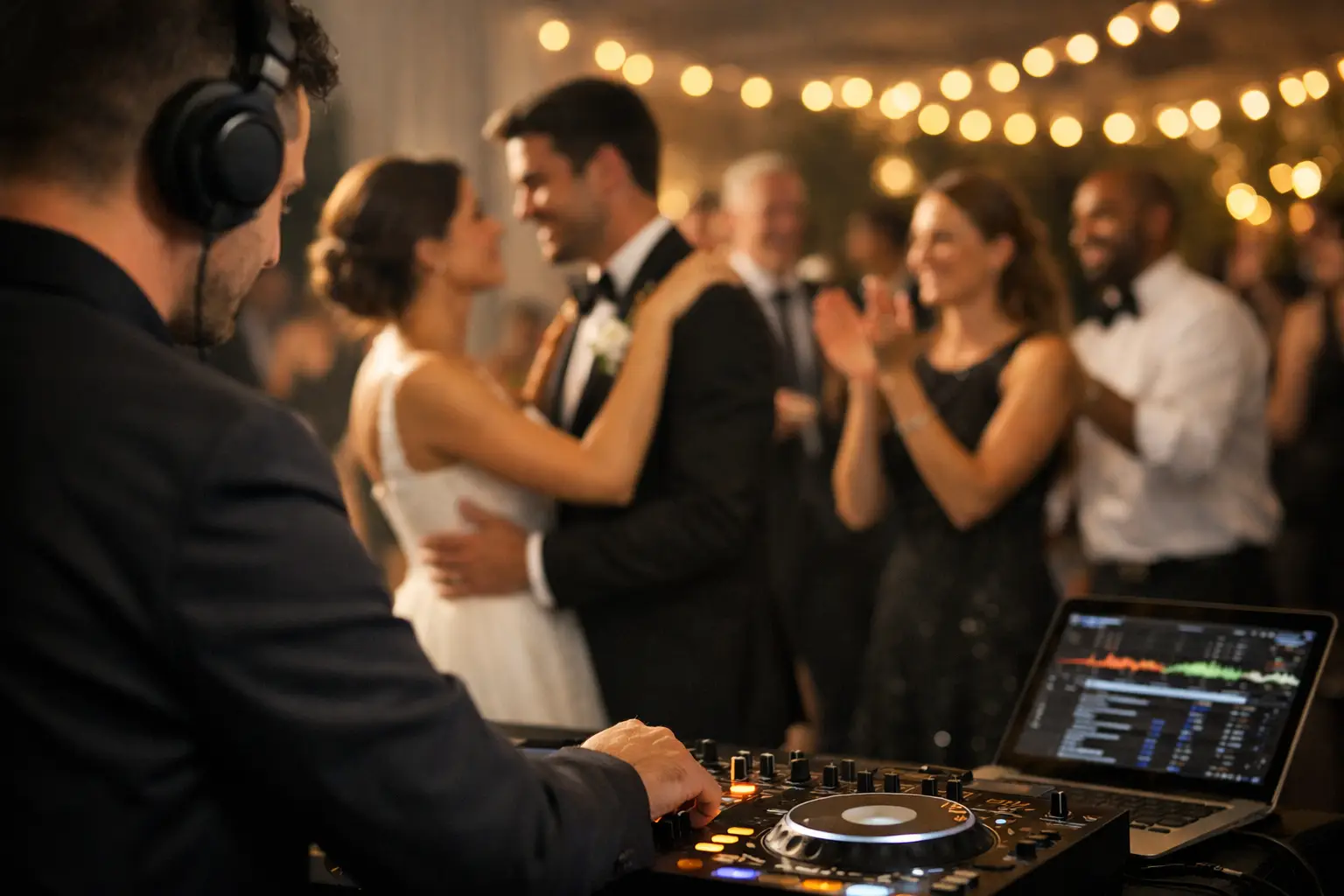
The first dance ends, the room applauds, and there is a brief moment when every guest looks towards the dance floor. A great wedding DJ knows exactly what happens next. Rather than letting the energy drop, they move naturally into the track that brings friends, parents, colleagues and grandparents together. That instinct is what turns a well-planned reception into the party guests talk about long after the final song.
Your DJ is not simply there to press play. They help shape the pace of the evening, support the formal moments, manage the atmosphere between them and create a soundtrack that feels unmistakably yours. For couples investing in a beautifully styled celebration, that combination of personality, timing and professional presentation matters.
A wedding DJ sets the pace of the celebration
A wedding reception has several distinct moods. Drinks reception music should welcome conversation without taking over the room. The wedding breakfast needs warmth and character, but it should still allow guests to hear each other. Then comes the transition into speeches, cake cutting, the first dance and the full evening party.
Each moment needs a different approach. A skilled DJ understands when to keep music in the background, when to build anticipation and when to make the dance floor the centre of attention. The best results rarely come from one fixed playlist. They come from someone watching how guests respond and making confident choices in real time.
This is especially valuable with a mixed-age guest list. One table may be waiting for singalong classics, another may light up for R&B, house, indie or current chart music. A professional does not try to please every person with every track. Instead, they create a rhythm that gives different groups their moments while keeping the room connected.
What a wedding DJ really does
Reads the room, not just the request list
Your music preferences should lead the night. Favourite artists, must-play songs and genres you would rather avoid all give your DJ a clear brief. Yet a request list is only one part of the job. A room full of guests has its own energy, and a DJ needs the judgement to respond to it.
If a brilliant-looking dance floor is thinning after a run of one genre, the next choice matters. If a particular decade brings everyone forward, that is useful information. The right DJ can adjust without making those changes feel abrupt or random. Guests simply experience a party that keeps getting better.
There is a balance here. Couples should not expect their carefully chosen music to be ignored, and a DJ should not follow a list so rigidly that it misses what is happening in front of them. The strongest approach is collaborative: agree the musical direction beforehand, then allow room for professional instinct on the night.
Protects the key moments
The evening schedule can change quickly. Speeches may run over, photographs can take longer than expected, or guests may be ready to dance sooner than planned. A prepared DJ works around those changes calmly, coordinating with the venue team, photographer and other suppliers where needed.
They also make sure the practical details feel considered. Entrances need the right cue. The first dance needs the right track and timing. Microphones for speeches should be clear and dependable. Music levels should suit the room, whether you are celebrating in a refined country venue, a marquee or a city event space.
That behind-the-scenes control lets you stay present. You should be greeting guests, enjoying your meal and taking in the atmosphere, not checking whether somebody has remembered the cake-cutting song.
Gives the room a polished focal point
Sound matters, but so does how the entertainment looks in your venue. A smart DJ setup should complement the styling rather than compete with it. Clean presentation, carefully positioned lighting and professional equipment make a difference in photographs and in the overall feel of the room.
This does not mean every wedding needs a club-style production. Some celebrations suit subtle, warm lighting and a discreet setup. Others call for a bigger party atmosphere once the evening begins. Your venue size, guest count, layout and preferred look should inform the production, not the other way round.
How to choose the right wedding DJ
Start with the experience you want guests to have. Do you picture a relaxed evening that builds steadily, a full dance floor from the first dance onwards, or a reception with a particular musical identity? The answer will help you have a more useful conversation than simply asking for a price.
When speaking to potential suppliers, ask about their approach to planning and how they handle change on the night. You are looking for confidence without a one-size-fits-all attitude. A DJ should be able to explain how they gather your preferences, manage guest requests and work alongside your venue team.
It is also worth discussing these practical points before booking:
- Whether they provide a planning consultation and a clear way to share your must-play and do-not-play music.
- What sound, lighting and microphone equipment is included, and how it will suit your venue.
- Their arrival, setup and pack-down arrangements, including coordination with the venue.
- Their contingency planning, including backup equipment and cover should an unforeseen issue arise.
Professionalism is often visible in the small details. Prompt communication, clear timings and an organised plan are strong signs that the supplier understands the responsibility of a wedding day. The entertainment may feel effortless to guests, but it should be backed by careful preparation.
Build a soundtrack that feels personal
A memorable reception does not have to be built around obscure songs or a highly restrictive theme. Personal music choices can be woven through the night in simple, meaningful ways. Your ceremony exit track, drinks reception soundtrack, entrance music and first dance create a story before the open dance floor even begins.
For the party itself, give your DJ the context behind your choices. Perhaps you both love 90s dance, met at a festival, always return to Motown on a road trip, or want a late-night run of garage and house. A little explanation helps create a set with character rather than a collection of disconnected requests.
Be equally honest about what you do not want. If certain tracks, genres or novelty songs would take you out of the moment, say so clearly. It is your celebration. A good DJ will respect those boundaries while still keeping the floor lively.
Guest requests are another decision worth making in advance. They can be a brilliant way to involve friends and family, particularly later in the evening. But they need to fit your agreed direction. You can ask your DJ to welcome requests, take them selectively, or avoid them altogether. There is no universal right answer.
Pair the dance floor with moments guests can keep
Music creates the shared energy of the reception. A premium photo booth, magic mirror or selfie pod adds a different kind of interaction: a reason for guests to gather, pose, laugh and leave with a memento from the night.
The pairing works particularly well because it gives guests a choice. Not everyone wants to spend every song dancing, and a beautifully presented booth offers another focal point without pulling the atmosphere away from the party. Guests can capture a moment between songs, then head straight back to the dance floor.
For couples who want a cohesive look, think about placement and timing. Positioning a booth close enough to be noticed but away from busy service areas keeps guest flow comfortable. Matching the backdrop, print design or digital overlay to your stationery and colour palette also makes the experience feel intentional.
Choosing one provider for DJ entertainment and a photo experience can simplify planning too. Gatwick Sound Photo Booth brings these elements together with professional hosting, considered presentation and a clear understanding of how entertainment should work within a wedding schedule.
The details that keep the party moving
Even the best music needs the right conditions. Before finalising your plans, check venue sound restrictions, access times, loading arrangements and whether the DJ area has a suitable power supply. Older buildings, outdoor spaces and venues with strict sound limiters may require a different approach than a modern dedicated events space.
Ask your DJ what they need from the venue and make sure those details are confirmed early. It is far easier to plan the right setup than to solve a last-minute access issue while guests are arriving.
Also consider the handover from daytime to evening. If your photographer is capturing the first dance, your DJ can allow a little space around the floor for them. If evening guests are arriving at the same time, a well-timed upbeat track can make them feel part of the celebration immediately. These are small choices, but they shape how smoothly the night unfolds.
A full dance floor is never just about playing familiar songs. It comes from a DJ who understands your taste, respects the occasion and has the experience to respond to the room. Choose someone you trust, share the details that matter to you, and give them the space to create those joyful, unplanned moments that make a wedding reception feel completely your own.