Digital Sharing vs Printed Photos for Events
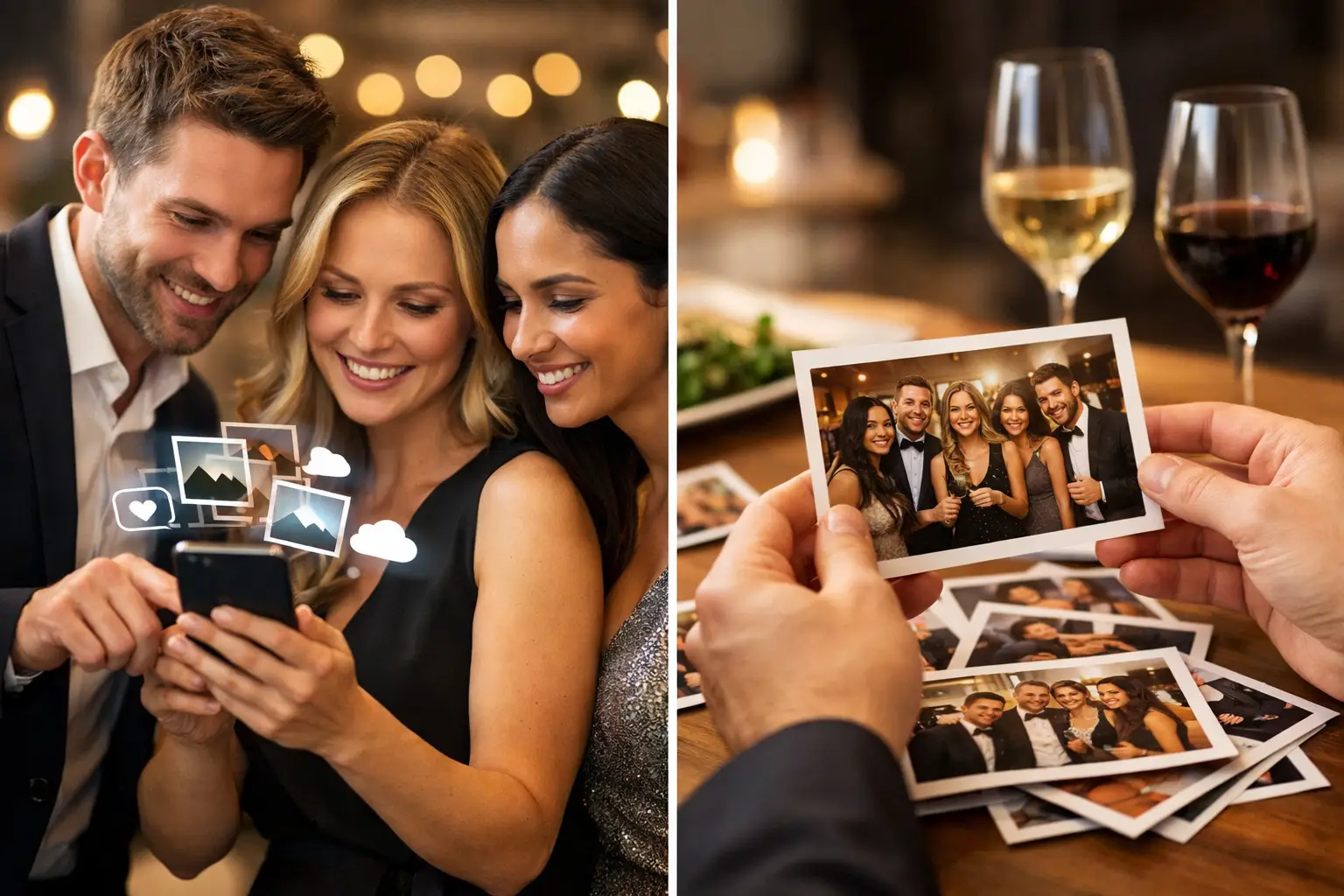
A memorable photo booth moment may last only a few seconds. Guests choose a pose, take the photograph and then decide what happens next. They may share the image immediately, take home a printed copy or enjoy both options.
The choice between digital sharing vs printed photos depends on the event, the guests and the type of memory you want to create. Digital images offer speed and convenience. Prints provide a physical keepsake that guests can take home.
For many weddings, parties and corporate events, combining the two creates the most useful experience.
What does digital photo sharing offer?
Digital sharing allows guests to receive their photographs, GIFs or short videos on a compatible device. They can then keep the content or share it through their preferred platform.
This option suits guests who want quick access to their images. It can also support events where digital content forms part of the wider experience.
At a wedding or birthday celebration, guests can share photographs with friends who could not attend. At a corporate event, a branded image may continue the conversation after the guest leaves the booth.
Digital sharing supports fast event content
Some photo booth formats work particularly well with digital delivery. GIFs, boomerangs and short videos are designed for screens rather than physical prints.
A 360 video booth, for example, captures movement and group interaction. Guests can receive a short clip that reflects the atmosphere of the event.
Digital content can also include an event name, date, campaign message or branded overlay. However, the design should not overwhelm the people in the image.
Guests are more likely to value content that still feels like their own photograph or video. Therefore, branding should remain clear but balanced.
Consider connectivity and privacy
Digital sharing depends on the venue and the chosen delivery method. Mobile reception and internet access can be unreliable in country venues, underground rooms and busy city locations.
Discuss connectivity with the supplier before the event. If the venue has limited internet access, the team may need another way to manage digital delivery.
Corporate organisers should also decide how guest information will be handled. Any data collection should have a clear purpose and follow the agreed event process.
A booth host can explain the sharing options and help guests use them. This prevents the booth area from becoming a line of people waiting beside a screen.
Why printed photographs still matter
A printed photograph offers a different experience. Guests can hold it, show it to other people and take it home immediately.
Prints also create a short social moment around the booth. Friends often look at the photograph together before returning to the party. That reaction becomes part of the experience.
Unlike another image stored on a phone, a print may remain visible after the event. Guests can place it on a desk, add it to a frame or keep it with other memories from the occasion.
Our guide to the benefits of instant photo booth prints explains how printed photographs can support different events.
Printed photos at weddings
Prints work particularly well at weddings because guests of different ages can enjoy them in the same way. They do not need an app, social media account or reliable internet connection.
The print design can include the couple’s names, wedding date and colours from the day. This helps the photographs feel connected to the stationery and venue styling.
Printed photographs can also support a wedding guestbook. Guests take one copy and place another beside a handwritten message for the couple.
This creates two versions of the same moment. The guest leaves with a keepsake, while the couple receives a personal record of the celebration.
Printed photos at corporate events
Corporate events can also benefit from prints. A branded photograph gives guests something physical to take away from an awards evening, conference or company celebration.
The design may include the company name, campaign identity or event date. However, it should still leave enough space for the photograph itself.
A formal awards evening may suit a clean printed portrait. In contrast, an exhibition or product launch may place more emphasis on digital content and fast sharing.
The right choice depends on what the organiser wants guests to remember and do after the experience.
When digital sharing may be the better choice
Digital sharing may deserve more emphasis when the event centres on movement, video or online content.
It can work well for:
- product launches and brand activations;
- exhibitions and conferences;
- staff celebrations;
- birthday parties and proms;
- 360 video experiences; and
- events where guests are travelling light.
Digital delivery also avoids the need for guests to carry prints during a busy event. However, the sharing process should remain simple and clearly explained.
When printed photos may be the better choice
Prints may be more important when the event has a personal or formal character.
They are particularly suitable for:
- weddings and anniversaries;
- family celebrations;
- proms and graduation events;
- awards evenings;
- charity dinners; and
- events using a physical guestbook.
Prints also work well for guest lists that include several generations. Everyone can receive the same keepsake without needing to use a phone.
Why many events benefit from both
Digital sharing and printed photos do not need to compete. Offering both allows guests to choose how they want to keep the moment.
At a wedding, printed photographs can become part of the guestbook. Meanwhile, digital copies allow friends and family to share their favourite images during or after the reception.
At a corporate event, a print can provide a physical reminder of the occasion. The digital version can then support internal sharing or online event content.
At a birthday party or prom, guests may take home a print while also receiving a digital copy for their phone.
This combination makes the booth accessible to a wider range of guests. It also allows one photograph to serve both an immediate and a lasting purpose.
Match the format to the event
The booth format will influence the available content. A Selfie Pod can provide photographs and digital options within a compact setup. A Magic Mirror offers a larger visual feature and works well for group photographs and prints.
A 360 booth focuses on moving digital content rather than traditional printed photographs. Therefore, it suits guests who are happy to perform, move and appear in short videos.
Before choosing, consider:
- the ages and preferences of your guests;
- the available floor space;
- the venue’s internet connection;
- whether you want a guestbook;
- the importance of branded content;
- the type of photographs or videos you want; and
- how guests should receive their content.
For parties, our guide to Selfie Pod and photo booth ideas provides further help with choosing an event format.
Keep the designs consistent
If you offer prints and digital sharing together, both versions should follow the same visual style.
The print template and digital overlay can use matching colours, fonts and event details. This creates a consistent result without making the design feel crowded.
For corporate events, the branding should follow the wider campaign. Our corporate booth branding guide explains how event identity can appear across the booth experience.
For weddings and private celebrations, the design can reflect the invitations, table styling or colour palette. However, the photograph should always remain the main feature.
Think about the complete guest experience
The delivery format is only one part of a successful booth. Placement, lighting, timing and support also affect how guests respond.
The booth should be easy to see and join. It also needs enough room for guests to pose, collect their prints and leave without blocking the queue.
A trained host can welcome guests, explain the available options and keep the experience moving. This is especially helpful when the booth provides both prints and digital sharing.
The process should feel simple from beginning to end. Guests should understand how to take part and how they will receive the finished photograph or video.
Choose the right option for your event
Digital sharing provides speed, convenience and content that guests can access on their devices. Printed photographs offer a physical keepsake that can remain visible long after the event.
For many events, the best answer is to offer both. Guests can share the excitement immediately and still take home something tangible.
Gatwick Sound Photo Booth provides hosted booth experiences for weddings, parties and corporate events across London, Sussex, Surrey and Kent. We can help you choose a suitable booth format, print design and digital sharing option for your venue and guests.
To discuss the right photo booth experience for your event, Get a Quote.