Are 360 Booths Safe Indoors? A Practical Event Guide
A 360 booth can become one of the most memorable parts of an event. Friends step onto the platform, the camera moves around them and a short video captures the energy of the celebration.
However, couples and event planners should ask an important question before booking: are 360 booths safe indoors?
A 360 booth can be used indoors when the equipment suits the venue, the setup follows the manufacturer’s instructions and the supplier checks the proposed location. It also needs enough clearance, safe cable management and an experienced operator throughout the event.
What makes an indoor 360 booth different?
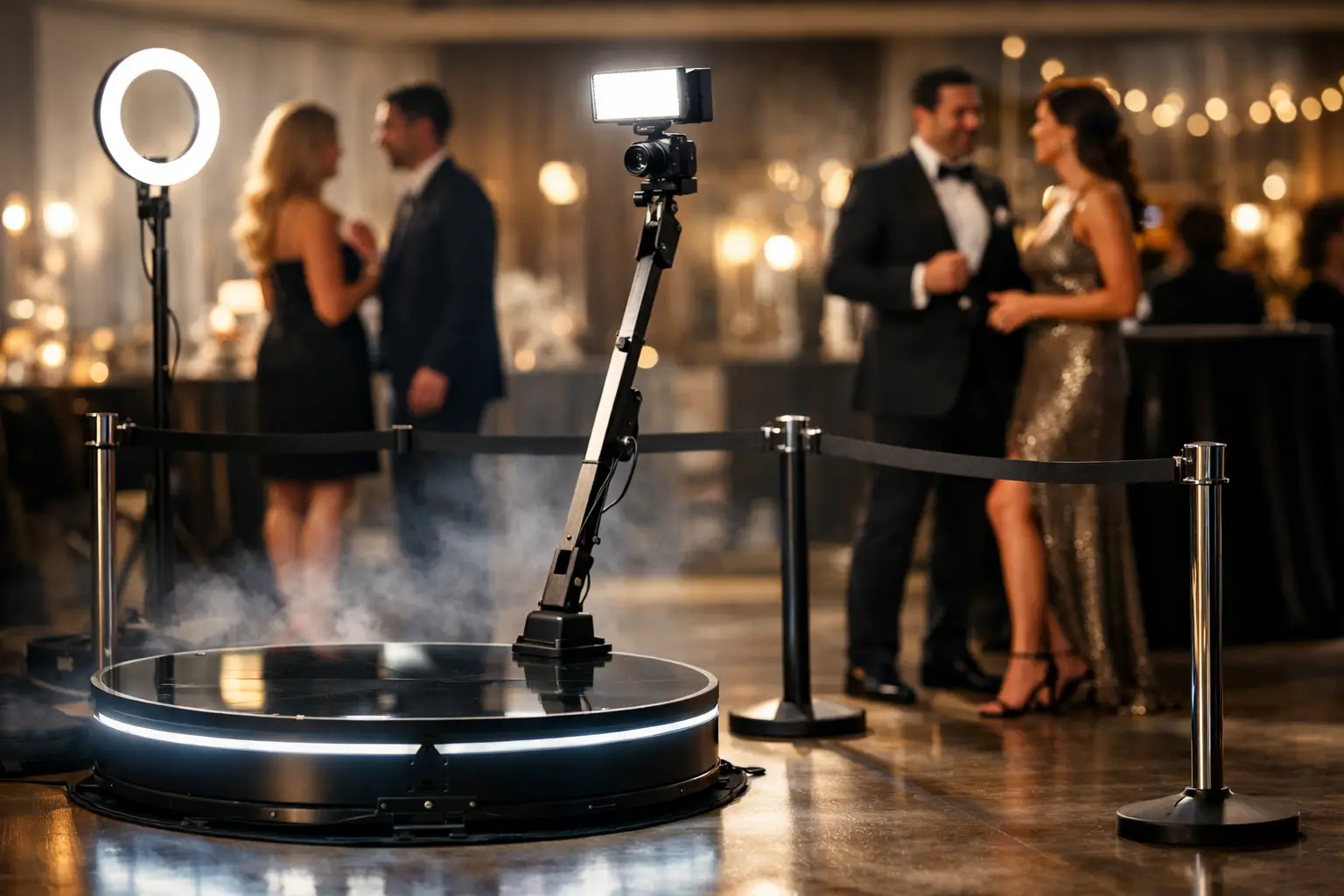
A 360 booth includes a platform and a moving camera arm. Guests stand on the platform while the camera travels around them to create a short video.
Because part of the equipment moves, the setup needs a defined operating area. Guests waiting nearby should remain outside that area until the operator invites them onto the platform.
The booth should not be treated like an unattended camera placed in a corner. A host needs to control each session, check the platform and make sure the surrounding space remains clear.
Check the venue before confirming the booking
Every venue has a different layout. Therefore, the booth position should be reviewed before the event rather than decided during setup.
The supplier may need a floor plan, photographs or measurements of the proposed area. The venue team should also confirm that the location does not interfere with guest movement or event operations.
Important checks include:
- the size and shape of the available area;
- the floor surface and any changes in level;
- ceiling height and hanging decorations;
- the position of nearby doors and furniture;
- access to a suitable power supply;
- the route used for installation and removal; and
- the venue’s own equipment and safety requirements.
If the venue cannot provide enough suitable space, another booth format may be a better choice.
Allow space around the whole booth
The platform is only one part of the required footprint. The rotating arm also needs clearance throughout its full movement.
In addition, the layout needs room for the operator, guests waiting their turn and a clear entry and exit point. Props, lighting and other equipment may require further space.
Do not estimate the required area from the platform alone. The exact footprint depends on the model and setup. Therefore, confirm it directly with the supplier before booking.
Our guide to photo booth space requirements explains the wider points to consider when planning an event layout.
Use a firm and level floor
The booth needs a stable surface that suits the equipment. Uneven floors, soft ground and unexpected changes in level may affect the setup.
The supplier should inspect the proposed location and follow the manufacturer’s requirements. If the floor is unsuitable, the booth should be moved to another area or replaced with a more appropriate format.
The platform should also remain clear between sessions. Drinks, bags and loose props should not be left where guests need to step.
Keep guests clear of the moving arm
The camera arm creates the recognisable 360 video effect. However, guests and other people nearby need to remain outside its path.
The operator should begin each session only after everyone is correctly positioned and the surrounding area is clear. Guests should wait for instructions before stepping onto or leaving the platform.
People watching the experience should not stand within the operating area. A clear boundary and attentive hosting can help prevent guests from moving too close.
The arm’s operating speed and clearance should follow the equipment manufacturer’s instructions. These details should not be guessed or changed simply to fit a smaller room.
Follow the platform capacity
Every platform has a limit set by its design and specification. The operator should control how many guests take part in each video.
A larger group may be enthusiastic, but adding more people than the equipment allows can create unnecessary risk. It may also produce a crowded video with little room to move.
If a group is too large, it can create two or more videos instead. Smaller groups usually have more room to pose and follow the operator’s instructions.
Why a trained host matters
Continuous supervision is an important part of an indoor 360 booth experience. The host controls the equipment and guides guests through each session.
The host can:
- check that the operating area remains clear;
- control the number of guests on the platform;
- explain when to step on and off;
- keep drinks and loose items away from the equipment;
- manage the queue;
- pause the booth when conditions change; and
- stop a session when it should not continue.
This means the organiser can enjoy the event without needing to supervise moving equipment.
UK Health and Safety Executive guidance states that work equipment should be suitable for its intended use, maintained, inspected where necessary and used by people with appropriate information and training. You can read the relevant HSE work equipment guidance for further information.
Consider clothing, footwear and guest behaviour
Guests should be able to step onto the platform and remain stable during the session. Very high heels, long loose clothing and oversized props may require extra care.
Drinks should remain outside the operating area. This reduces the risk of spills and helps guests keep their balance.
The host should also use sensible judgement when someone appears unsteady or unable to follow the instructions. The guest can return later or choose another photo experience instead.
This becomes particularly important at evening events where alcohol is available. Friendly but clear supervision protects the guest and everyone waiting nearby.
Protect walkways and emergency routes
A visible booth can attract a queue. Therefore, the layout needs enough room for people to wait without blocking the rest of the venue.
The booth must not obstruct entrances, exits, catering routes or access to the bar and toilets. It should also remain separate from the busiest edge of the dance floor.
Government fire safety guidance requires clear passageways to escape routes. The venue remains responsible for its fire safety arrangements, so the proposed booth location should always be agreed with the venue team.
Further information is available in the official GOV.UK fire safety and evacuation guidance.
Manage power and cables safely
The booth needs access to a suitable electrical supply. The supplier and venue should agree how the equipment will receive power and where cables will run.
Cables should follow a route that reduces trip risks and protects them from damage. If a cable must cross a walkway, suitable protection may be required.
The Health and Safety Executive advises event organisers and contractors to select, install and maintain electrical equipment appropriately. It also recommends routing cables to reduce trip hazards and potential damage.
The booth should never be positioned solely because a power socket is nearby. Guest safety, equipment clearance and venue access remain equally important.
Plan the installation time
A 360 booth needs time for installation, inspection and testing before guests begin using it.
At a wedding, setup may take place before the reception or while another part of the celebration is underway. At a corporate event, the booth may need to be ready before registration or the evening reception.
Discuss access times with the venue in advance. Central London venues, hotels and conference spaces may have timed loading slots, parking restrictions or shared lifts.
The supplier should have enough time to complete the setup without rushing or interrupting guests.
Match the booth to the room
A 360 booth may not suit every indoor space. A narrow room, low ceiling or busy walkway can make another format more practical.
A Selfie Pod uses a smaller footprint and does not have a rotating camera arm. A Magic Mirror can also provide an interactive experience without placing guests on a platform.
Choosing another booth is not a lesser option. Each format creates a different type of content and guest interaction.
You can explore our hosted photo booth services to compare the available formats for weddings, parties and corporate events.
Plan branded 360 experiences carefully
Corporate 360 booths can include digital overlays, campaign colours and event branding. However, the visual plan should never reduce the space required for safe operation.
Backdrops, signs and display materials must remain outside the moving arm’s path. They should also avoid blocking exits or narrowing guest routes.
For more information about corporate presentation, read our guide to branded booth activations.
Questions to ask before booking
Before confirming an indoor 360 booth, ask the supplier:
- how much total space the setup requires;
- what floor surface the equipment needs;
- what ceiling clearance is required;
- how many guests can use the platform at once;
- whether a trained host remains with the booth;
- what access and power arrangements are needed;
- how cables and the operating area will be managed; and
- what venue information is required before the event.
You should also ask the venue whether it has any restrictions on equipment placement, operating times or installation.
Are 360 booths safe indoors?
A 360 booth can operate indoors when the venue, equipment and proposed layout are suitable. The supplier should follow the manufacturer’s instructions, assess the setup area and supervise the booth throughout the event.
Enough clearance, a stable floor, controlled guest numbers and safe cable routes all contribute to a well-managed experience. The venue’s access and emergency arrangements must also remain protected.
Gatwick Sound Photo Booth provides hosted 360 video experiences for weddings, parties and corporate events across London, Sussex, Surrey and Kent. We consider the venue, available space, access and guest flow before confirming the setup.
To discuss whether a 360 booth is suitable for your event and venue, Get a Quote.