How to Brand a Photo Booth for an Event
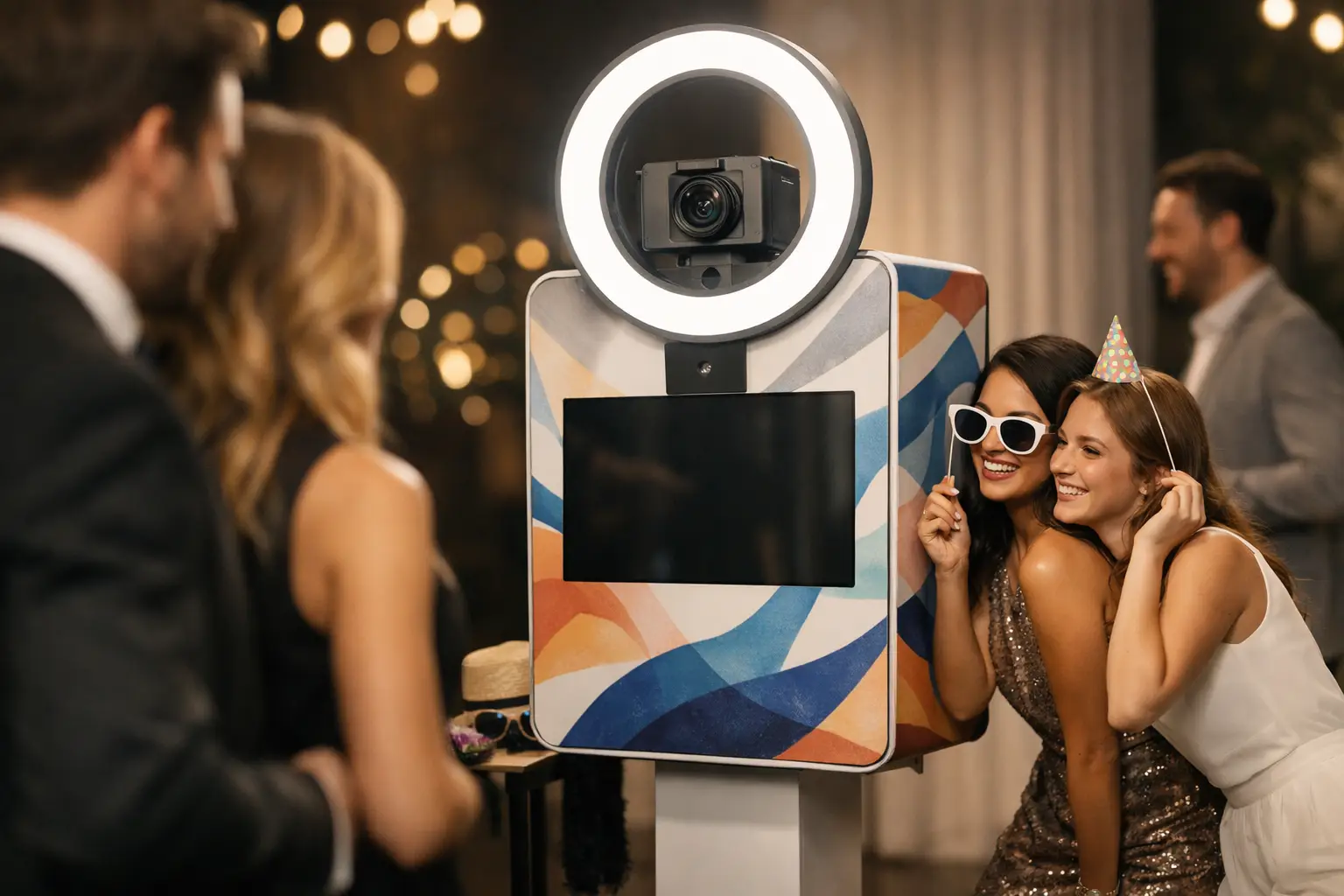
A logo in the corner of a print does not automatically create a branded photo booth. Effective branding connects the booth, backdrop, screen graphics, photographs and sharing experience with the wider event.
The approach also depends on the occasion. A wedding may need colours and typography that match the stationery. A product launch may require campaign graphics and digital content. Meanwhile, an awards dinner often benefits from a restrained design that complements the venue.
This guide explains how to brand a photo booth without making the finished photographs feel crowded or overly promotional.
Start with the purpose of the booth
Before creating templates, decide what the booth needs to achieve. This will guide every later design choice.
The main objective may be to:
- provide personalised wedding keepsakes;
- create branded photographs for a company event;
- support a product launch or campaign;
- encourage social sharing;
- collect consent-based visitor information; or
- give guests a coordinated event experience.
A booth designed for a private celebration will not need the same branding as an exhibition activation. Defining the purpose first prevents unnecessary logos, messages and visual elements from being added later.
Collect the correct brand assets
Good booth design starts with suitable source files. A small logo copied from a website may look blurred when placed on a backdrop or large screen.
For a corporate event, request:
- a high-resolution or vector logo;
- approved brand colours;
- the correct logo variations;
- preferred fonts or suitable alternatives;
- campaign graphics;
- event hashtags or messages; and
- any restrictions within the brand guidelines.
Wedding branding may use the couple’s names, date, monogram, invitation design or colour palette. These details can help the booth feel connected to the celebration without turning it into a corporate-style display.
Always confirm the spelling of names, dates and campaign wording before the designs are approved.
Choose a booth that suits the visual identity
The booth itself forms part of the event design. Therefore, its shape, colour and size should suit the room as well as the intended content.
A Selfie Pod has a clean, compact appearance. It can work well at conferences, exhibitions and modern venues where digital content is the priority.
A Magic Mirror creates a more visible feature. Its full-length design can suit gala dinners, weddings and awards events where guests are likely to dress formally.
A traditional booth provides a familiar format and can be coordinated with a physical backdrop, prints and guestbook. Meanwhile, a 360 booth places greater emphasis on movement, video overlays and social sharing.
The most technical option is not always the strongest choice. A simple booth with coordinated graphics can fit the event better than a dramatic installation that conflicts with the room.
Design a print guests will want to keep
Print branding needs restraint. The photograph should remain the main feature, with the branding supporting it.
A print template might include:
- an event name or date;
- a company logo or wedding monogram;
- a coordinated border;
- a short campaign message;
- a hashtag; or
- a web address where appropriate.
Avoid adding all of these elements unless they are genuinely needed. Too much text leaves less room for the photographs and makes the design difficult to read.
Logo placement should also be considered carefully. A small, clear logo often looks better than a large graphic covering part of the image. At weddings, names and the date may provide enough personalisation without additional wording.
Check the design at its finished size
A template can look clear on a large computer screen but become unreadable on a small print. Always review the design at the size guests will receive.
Check that:
- the text remains readable;
- faces will not be covered;
- the logo has enough clear space;
- the colours have sufficient contrast;
- the photographs are large enough; and
- important details are not too close to the edge.
If both print and digital versions are required, review them separately. A layout designed for a printed strip may not work correctly as a square social image.
Coordinate the backdrop
The backdrop appears in every photograph, so it often has more visual influence than the print border. It should support the event without making the images difficult to view.
Corporate options may include a step-and-repeat design, a campaign graphic or a simple backdrop using approved colours. For weddings, a floral wall, shimmer wall or neutral finish may complement the venue more naturally.
Repeated logos should be large enough to appear clearly but not so large that only part of each logo is visible behind a group. The number of guests expected in each photograph should influence the pattern and scale.
Lighting must also be tested against the backdrop. Reflective surfaces, pale logos and dark colours can look different under booth lighting.
Brand the booth screens
The screen is one of the first things guests see when approaching the booth. An idle screen can introduce the activity, while the start screen guides them through the process.
Useful screen branding may include:
- the event identity;
- a short welcome message;
- simple operating instructions;
- a campaign question;
- approved animation; or
- an indication of what guests will receive.
Instructions should remain short. Guests should be able to understand the process within a few seconds. A visually impressive screen is less useful if people do not know where to begin.
Plan digital overlays and filters
Digital branding can be adapted for photographs, GIFs and videos. The format should be designed around the way the content will be viewed.
For example, a digital overlay should remain clear on a mobile phone. Video graphics should not cover guests or delay the main content with a long introduction.
LumaBooth filters can create different visual finishes, while AI background replacement can place guests into branded or themed scenes. This can be useful at launches, conferences and campaign events where several visual options are required without several physical backdrops.
However, effects should support the idea rather than distract from it. A well-lit photograph with a clean overlay may be more shareable than an image filled with unnecessary graphics.
Create a consistent sharing experience
The branded journey should continue after the photograph is taken. Sharing screens, email delivery and the digital gallery can all use the same event identity.
Guests should understand how they will receive their content. Keep the process short and make any consent choices clear.
If the booth collects email addresses, separate image delivery from marketing permission. A guest who enters an address to receive a photograph has not necessarily agreed to future promotional messages.
A digital gallery can also extend the life of the event. The organiser may use it to review approved content, while guests can revisit their images after the occasion. Access and privacy settings should be agreed before the event.
Adapt the branding to the type of event
Weddings
Wedding booth branding usually works best when it follows the existing styling. Colours, typography and small details can be taken from the invitations, welcome signs or table stationery.
The finished print should still feel personal years after the wedding. Avoid temporary phrases or design trends that may quickly look dated.
A coordinated booth can become part of the wider wedding photo booth experience rather than appearing as an unrelated addition.
Corporate celebrations
For awards evenings, staff parties and company anniversaries, branding can recognise the business without dominating the photographs. An event name, date and carefully placed logo may be enough.
The booth host, backdrop and screen design should also suit the formality of the occasion.
Product launches and conferences
Launches and conferences can use stronger campaign branding. Custom backgrounds, questions and digital effects can connect the booth with the event message.
At events such as the World Finance Forum and MarTech Summit, interactive visual content can give delegates a reason to stop between sessions. The activity should still be quick to understand and easy to join.
For these events, the booth may form part of a wider corporate photo booth experience that includes digital content, gallery delivery and consent-conscious data capture.
Place the branded booth carefully
A well-designed booth can still underperform if guests cannot see it. Position affects participation, queues and the visibility of the branding.
The booth should be close enough to the event activity for guests to notice it. However, it should not block the bar, catering routes, doors or fire exits.
For corporate activations, consider where the branding will be visible from. At weddings, make sure the booth complements the reception room and does not interfere with speeches or the first dance.
Allow space for guests to wait without standing directly in front of the backdrop or blocking the next group.
Review everything before the event
A complete design proof should show more than the print template. Where possible, review:
- the print layout;
- digital image and video overlays;
- the booth start screen;
- the sharing screen;
- backdrop artwork;
- gallery branding; and
- email delivery wording.
Check the designs on both a desktop screen and a mobile phone. Then confirm the final versions before the supplier prepares the event setup.
Keep the guest experience at the centre
The strongest booth branding feels like part of the event rather than an advertisement placed over it. It helps guests understand the experience and produces photographs or videos they genuinely want to keep.
Gatwick Sound Photo Booth creates customised booth experiences for weddings, parties and corporate events across London, Sussex, Surrey and Kent. Available options include coordinated print designs, digital overlays, branded screens, filters, AI backgrounds and online galleries.
To discuss the design and practical requirements for your event, get a custom quote.